
Surgical guides
With us you can be sure that the surgery will go according to plan and patients will receive temporary dentures as soon as possible after the operation.
About
We focus on the most in-demand and complex aspect of surgical guides: the immediate loading protocol. This helps both experienced and new clinicians execute clinical tasks using the best possible scenario.
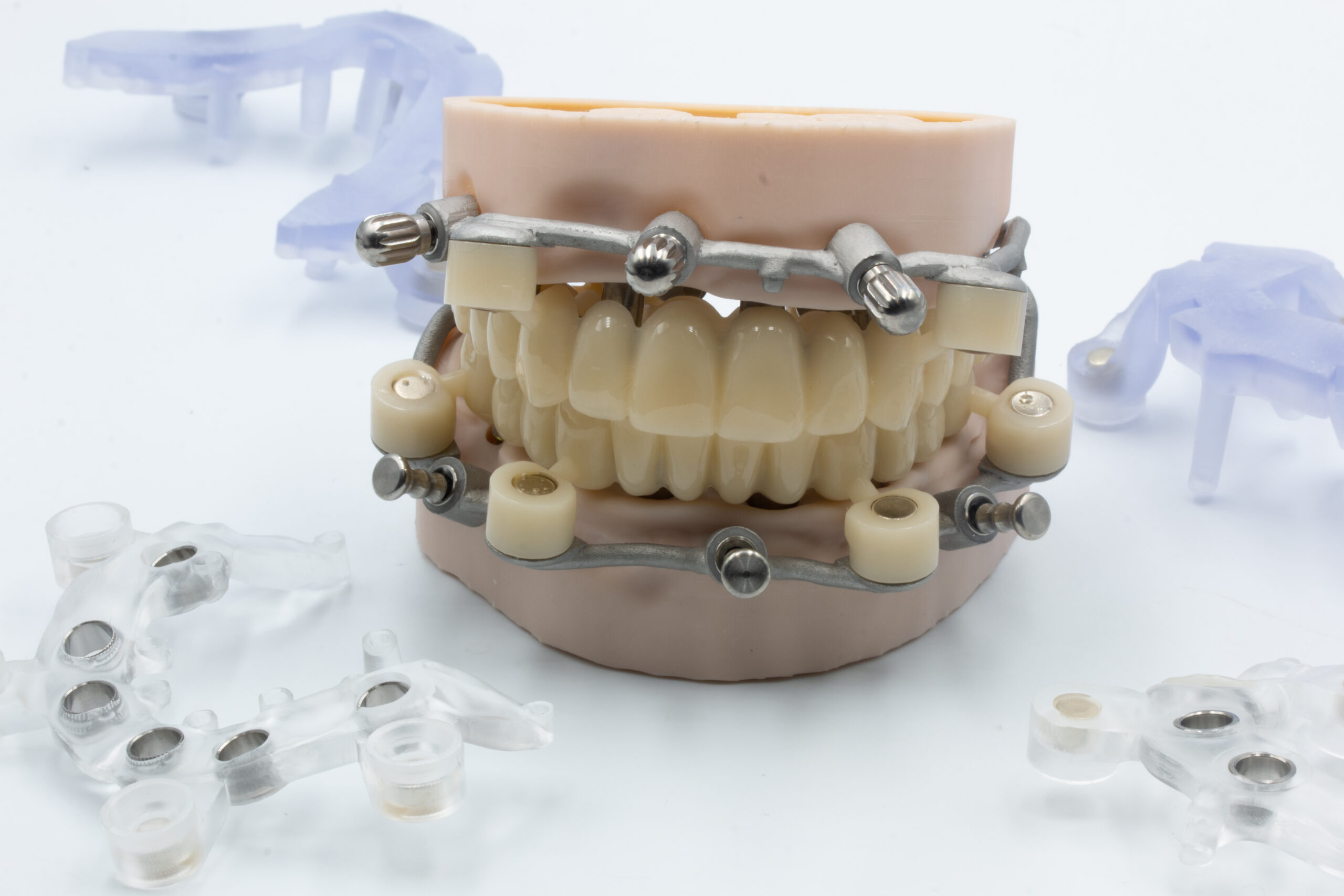
All components of the design are modeled individually, taking into account the goals of the surgical intervention and prosthetic work. The development of the surgical plan occurs in close communication with the clinician, drawing on our extensive experience in implementing such treatment plans.
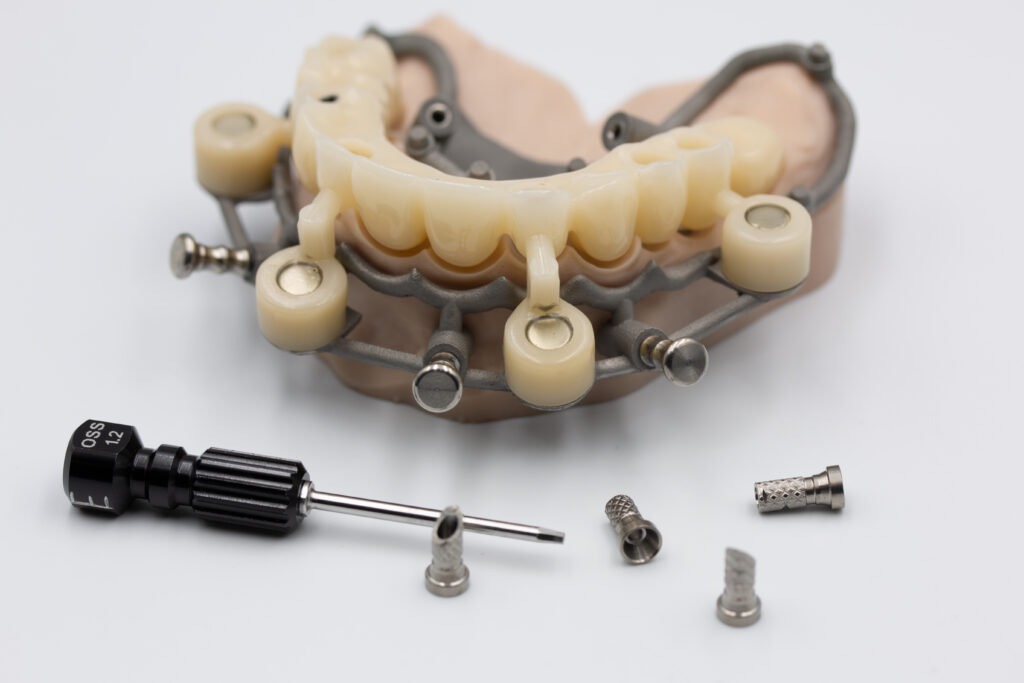
Start Working with Archicam's Surgical guides
Advantages of Surgical Guides
Reliability
You can be confident that the operation will proceed as planned (the digital surgical project will completely match the actual clinical picture).
Speed
The operation is thought out at the planning stage. You just need to follow the protocol, without wasting time on unnecessary actions.
Accuracy
Our experience allows us to assess the quality of scan and CT data and, if necessary, create auxiliary devices for double scanning to ensure correct alignment.
Competitive Advantage
You can provide the best service in the B2C dental market by implementing true immediate loading.
Soft Tissue Management
The thoughtful design of the construction allows for calm manipulation of soft tissue flaps without hindering implant placement.
Magnetic Fixation
The magnetic system allows for easy and quick removal and re-installation of subsequent guide elements, while reliably holding them in place.
Durability
The bar that reinforces the temporary prosthesis ensures the reliability of the structure, allowing you to treat patients who live far from your clinic and cannot easily come in for appointments.
Thoughtful Occlusion
We invest a lot of knowledge and attention into restoring not only aesthetics but also function. The anatomical modeling considers the state of the temporomandibular joint (TMJ), quality interdental contacts, and guidance. You'll only need to perform minimal occlusal adjustments after fixation.
Surgical Guide Creation Process
1 Gathering Initial Information
The process begins with the clinician sending the data:
- Scans of the jaws and bite (STL/PLY files)
- CT scan
- Patient photos
At this stage, a decision is made whether to perform an additional CT scan with individual markers for better file alignment. This step significantly impacts the accuracy of all subsequent stages.
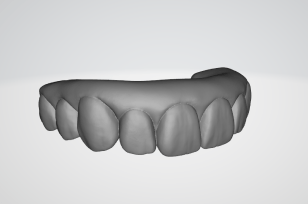
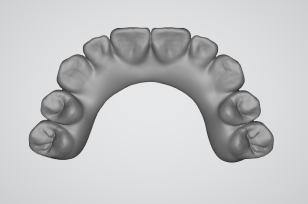
2 Anatomy Modeling
We perform the modeling and then coordinate the design with the clinician.
3 Implant Planning
This stage involves close collaboration with the clinician. We agree on the implantation concept, discuss whether bone augmentation or resection is needed, and select multi-units. We also address the necessity of using an individual titanium membrane and compile a list of components.
4 Modeling All Components of the Stackable Guide
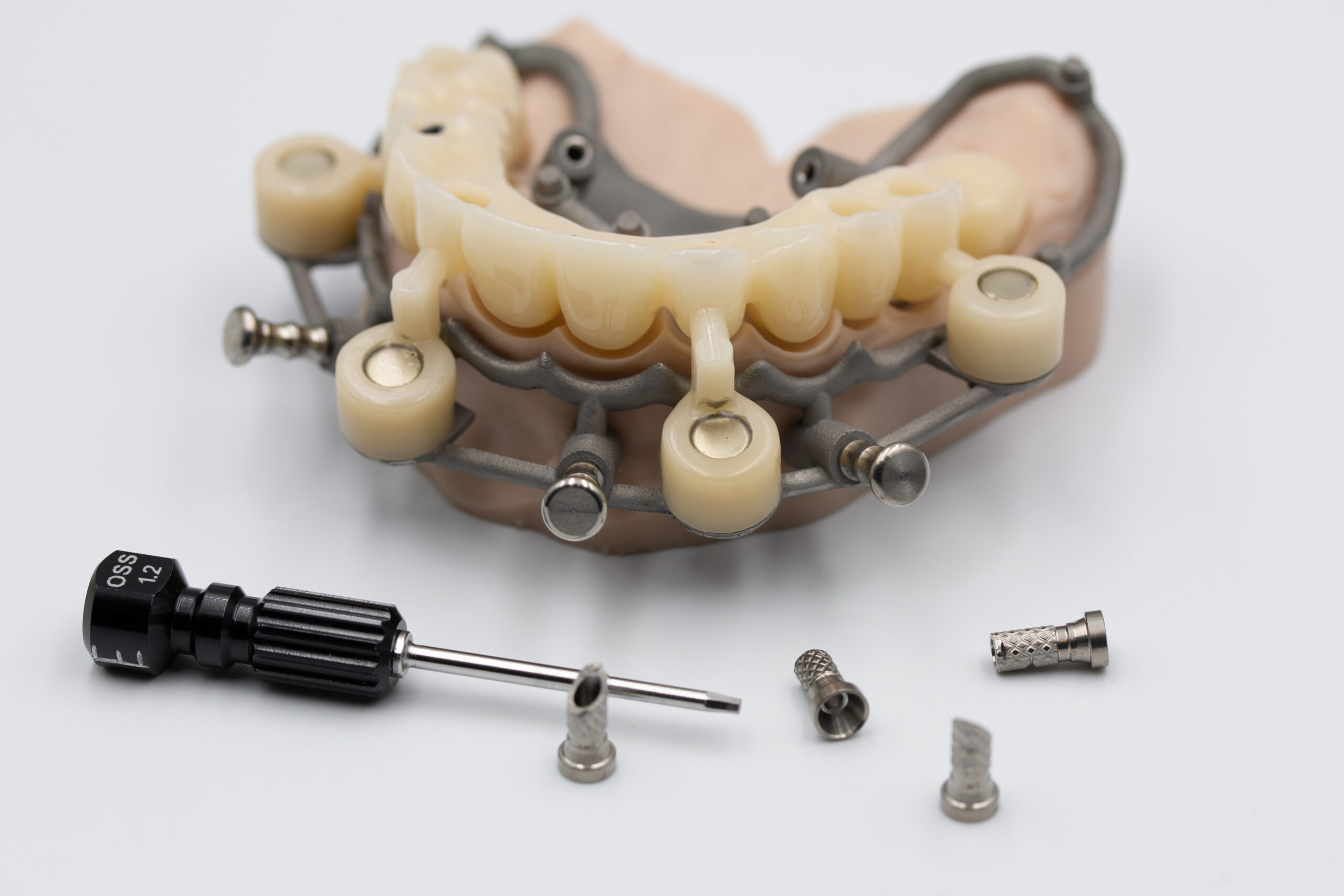
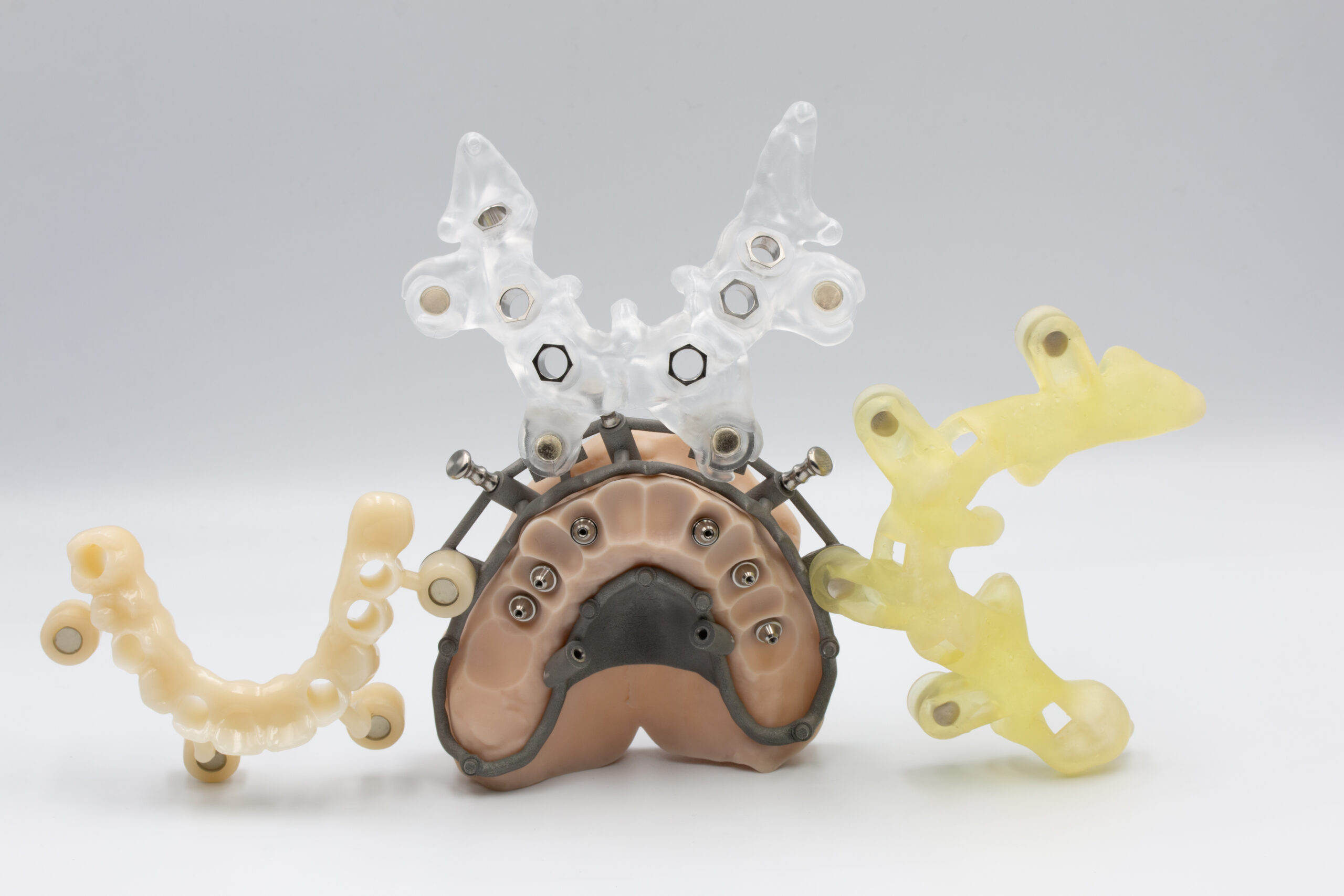
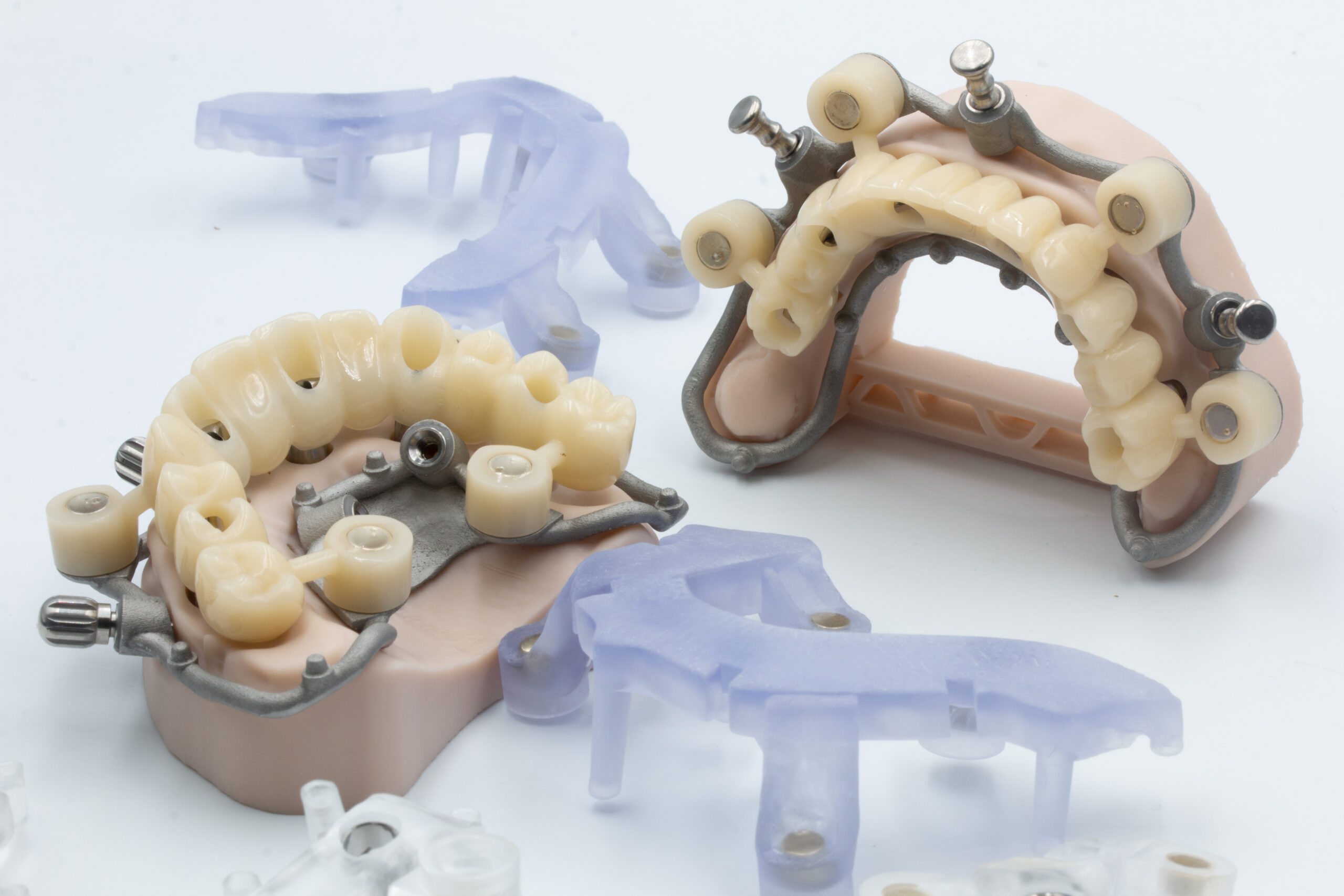
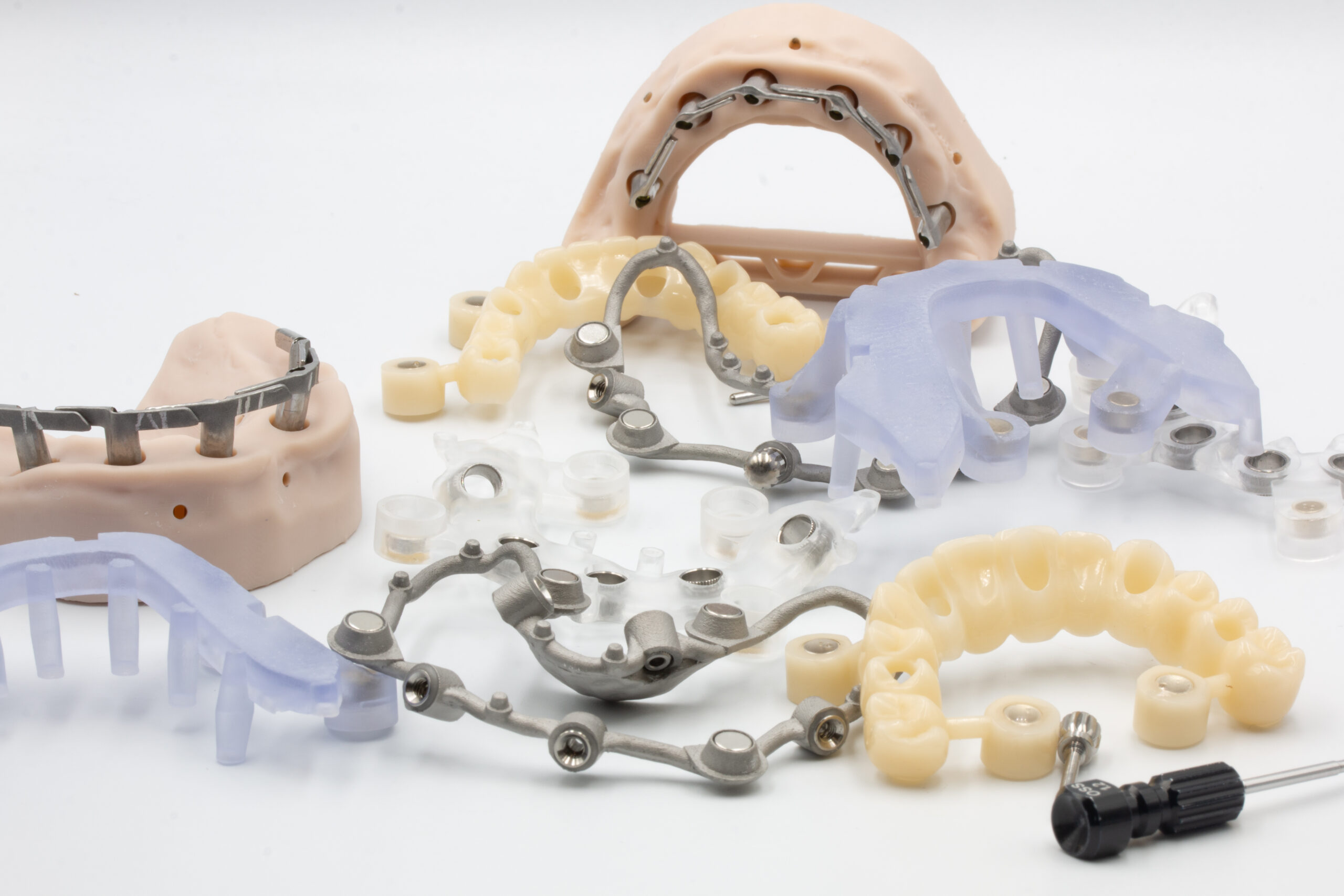
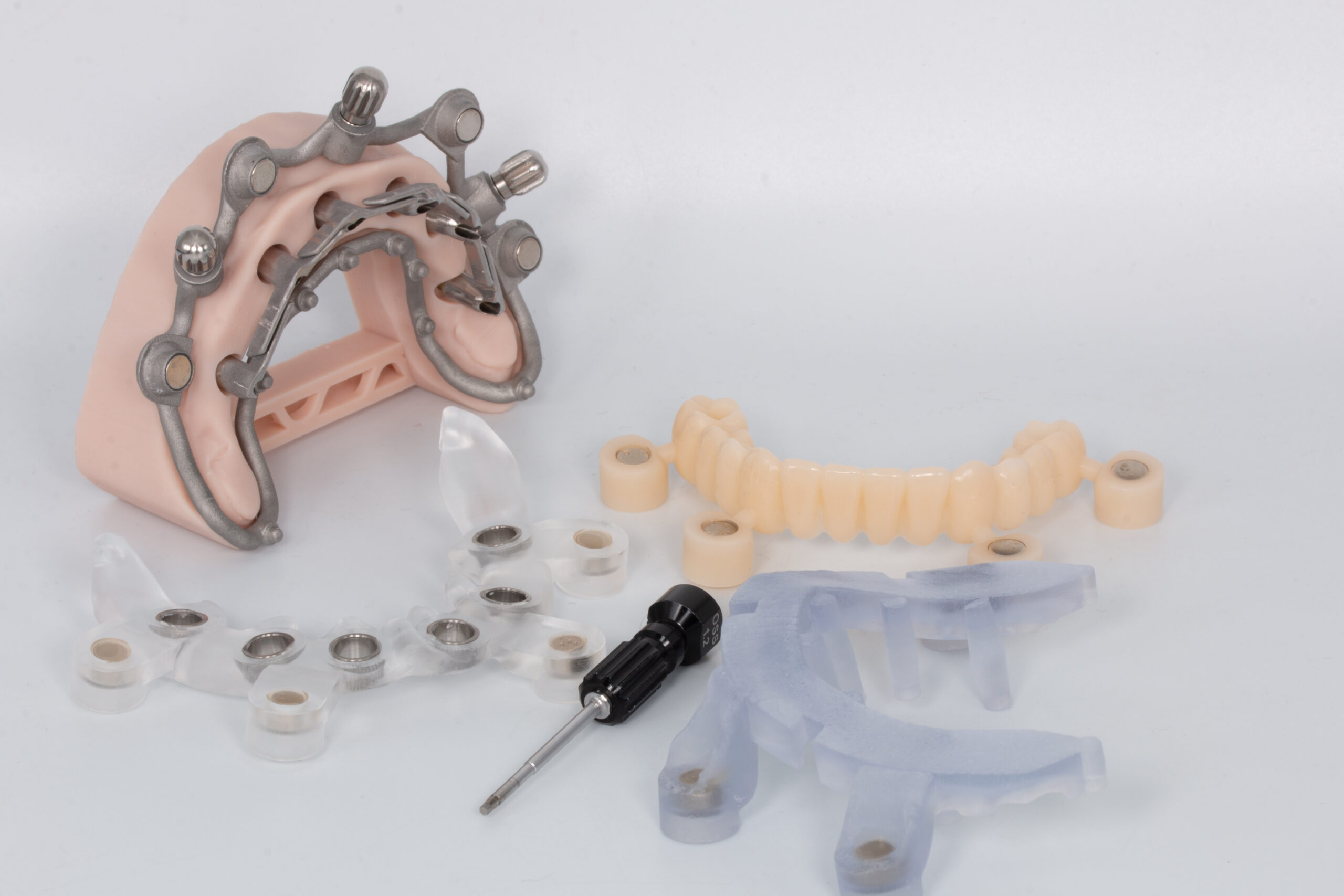
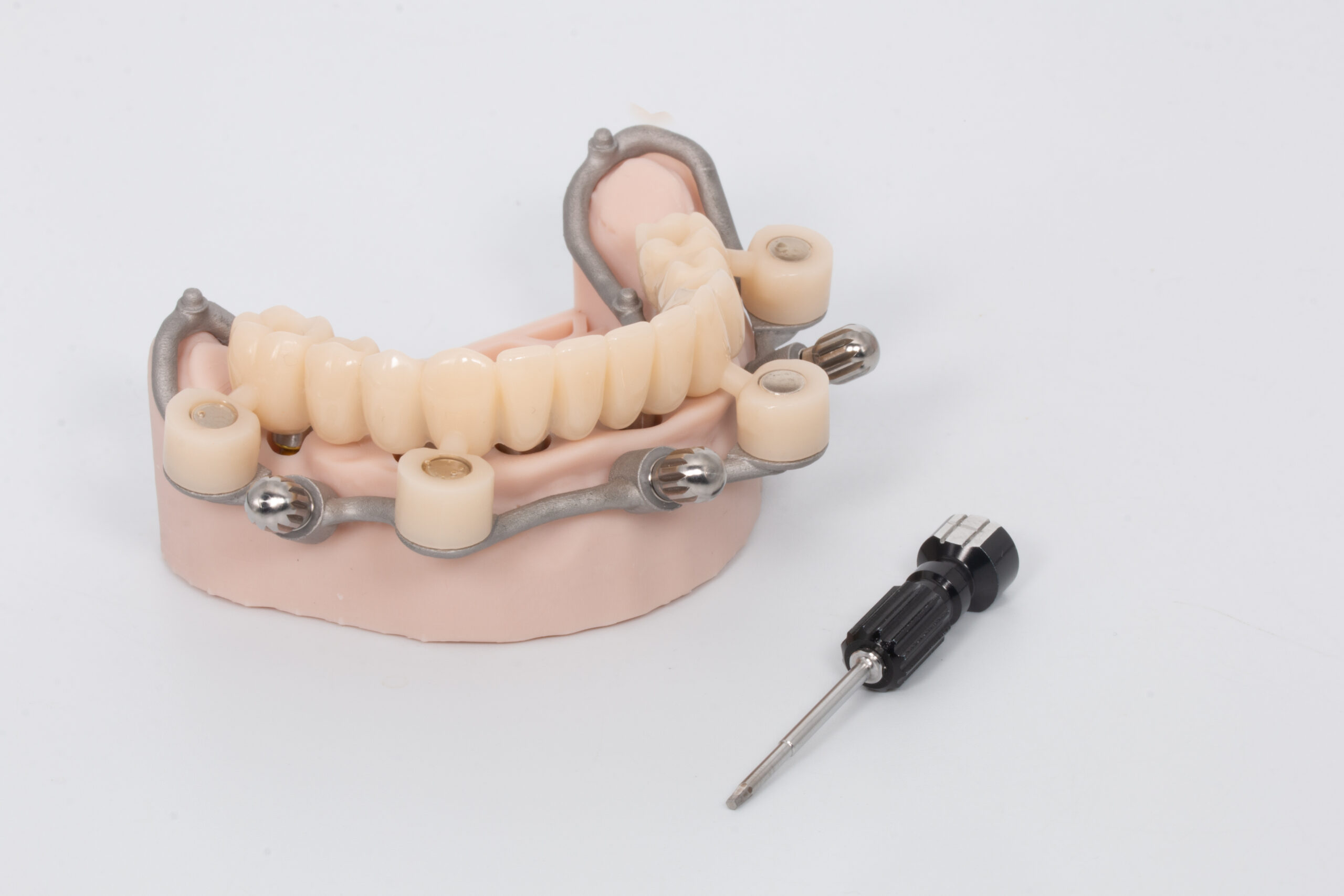
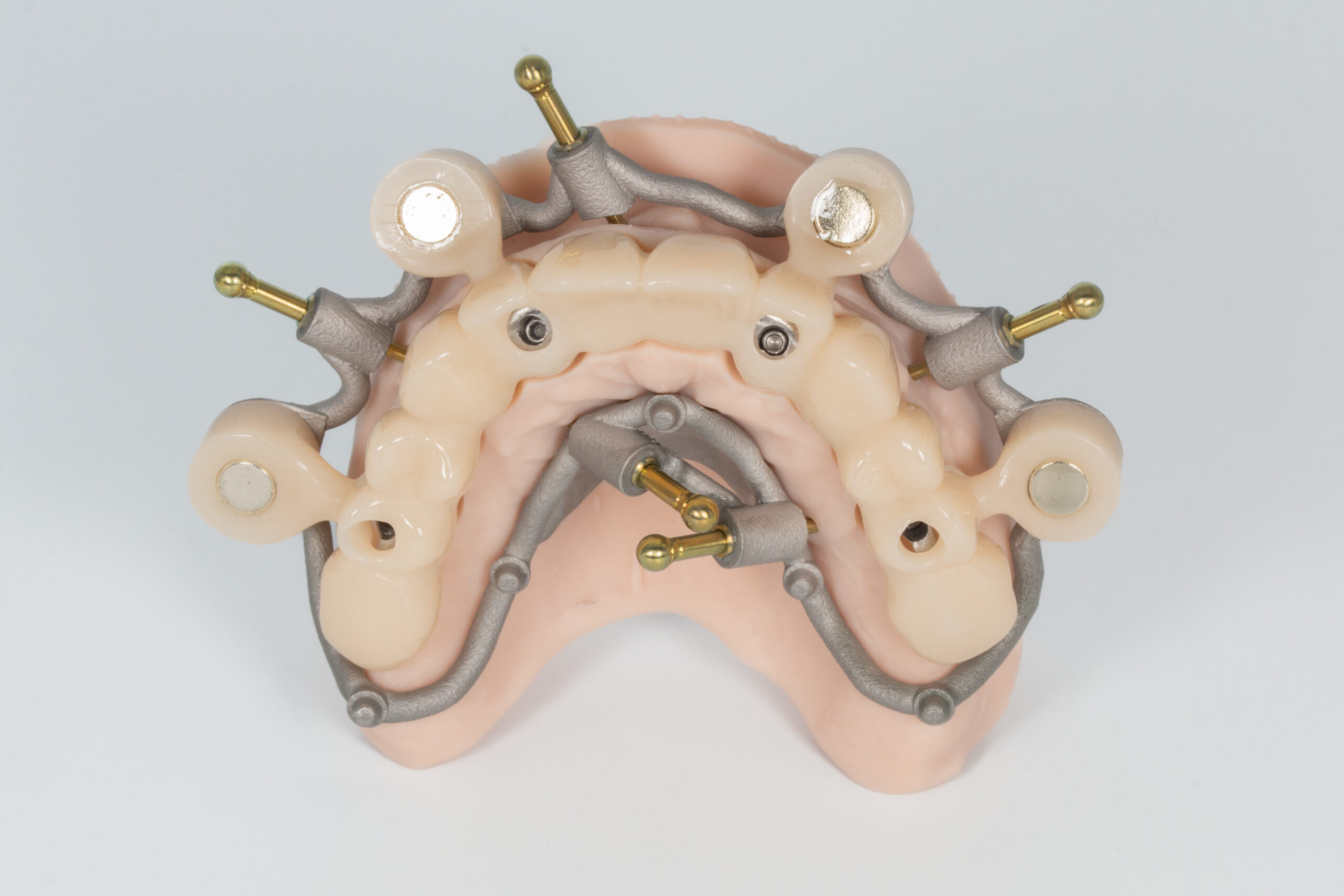
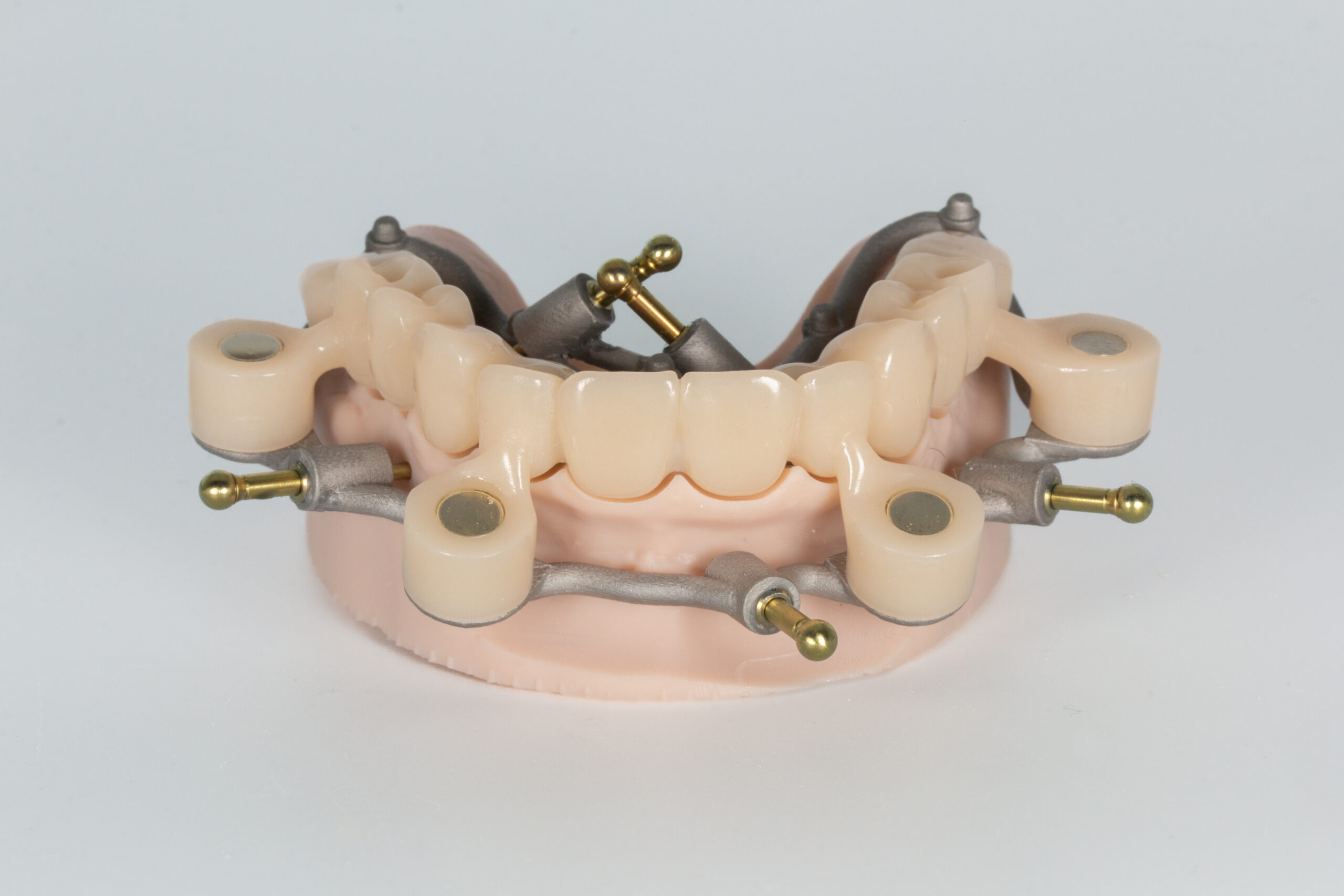
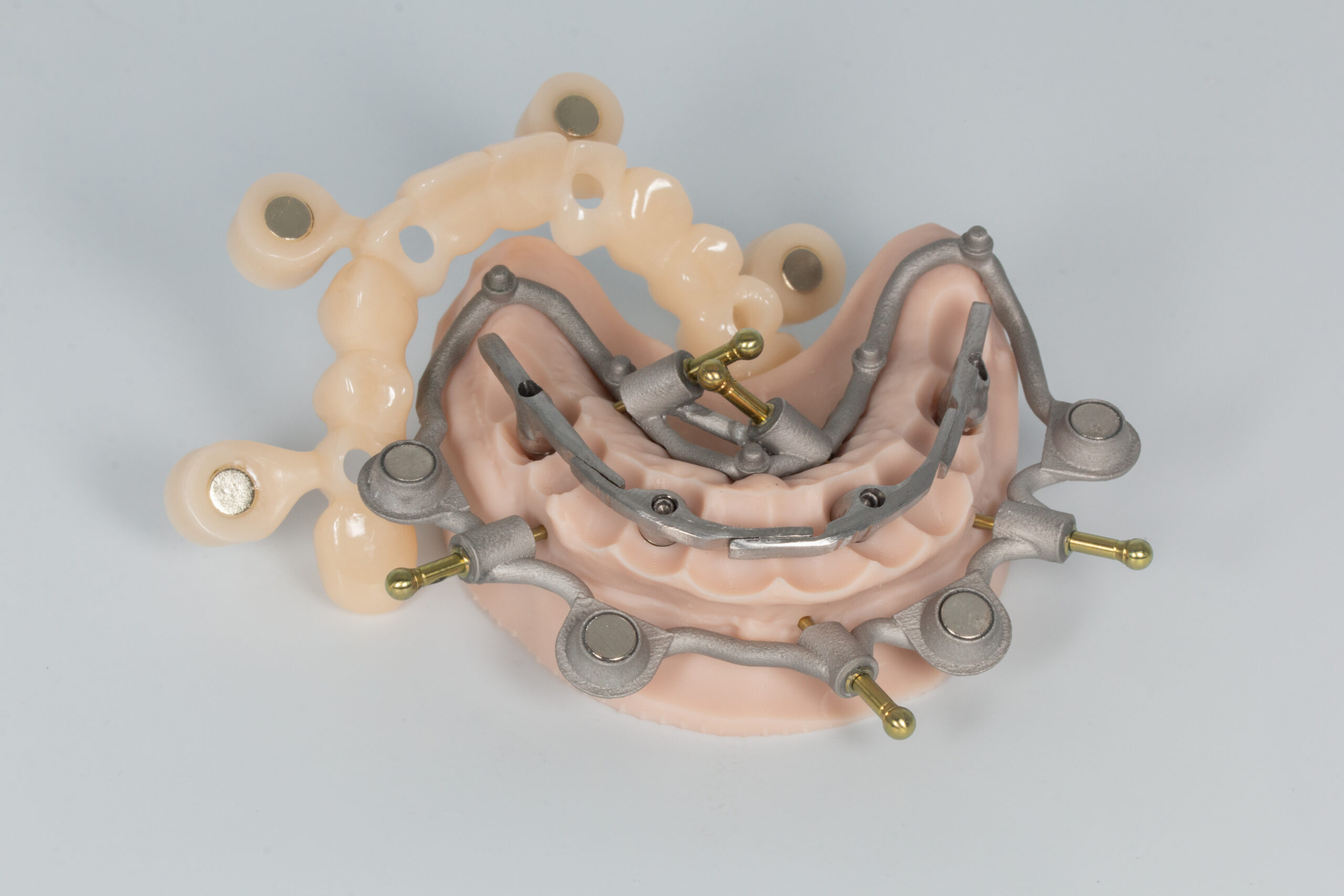
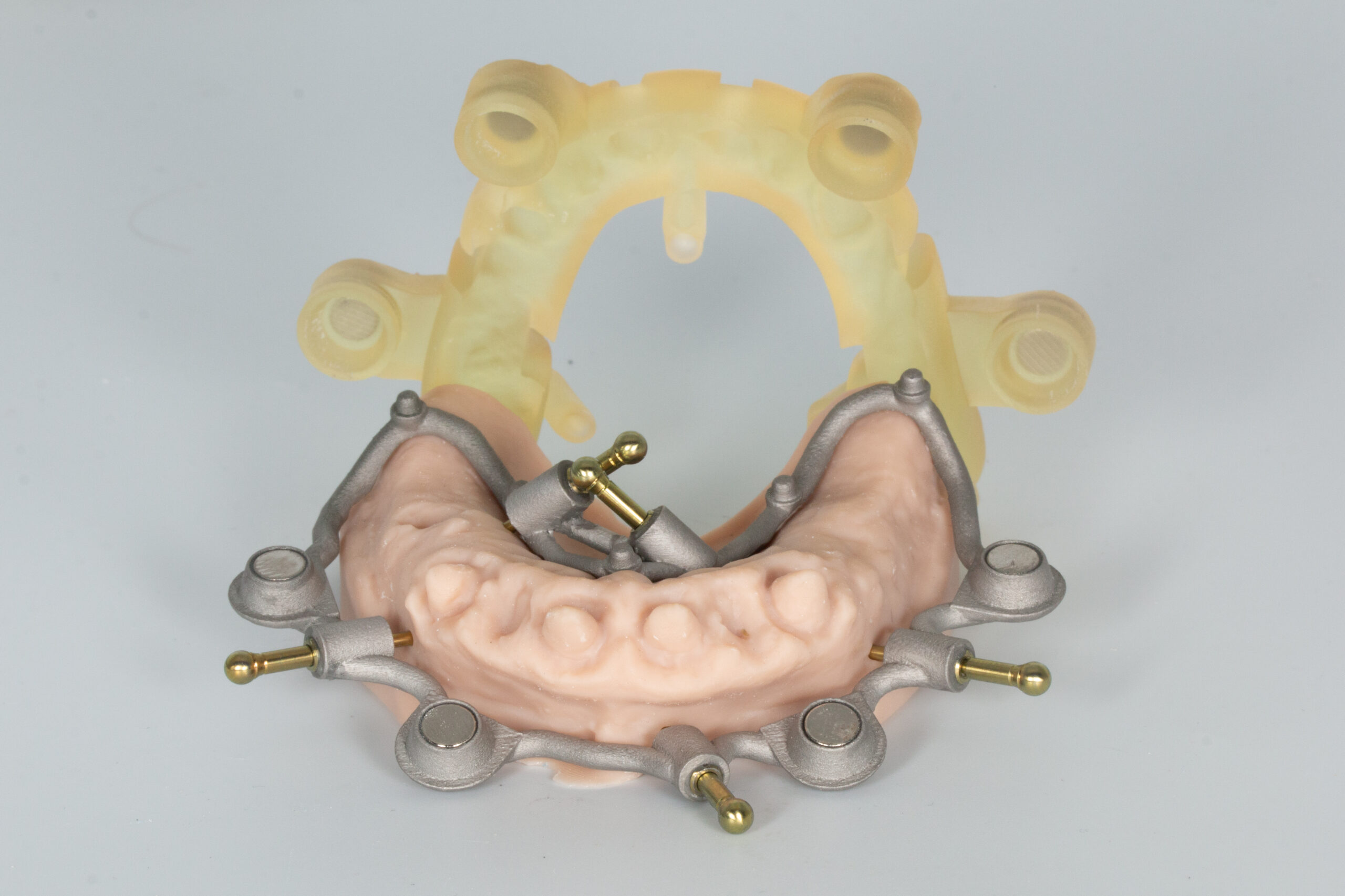
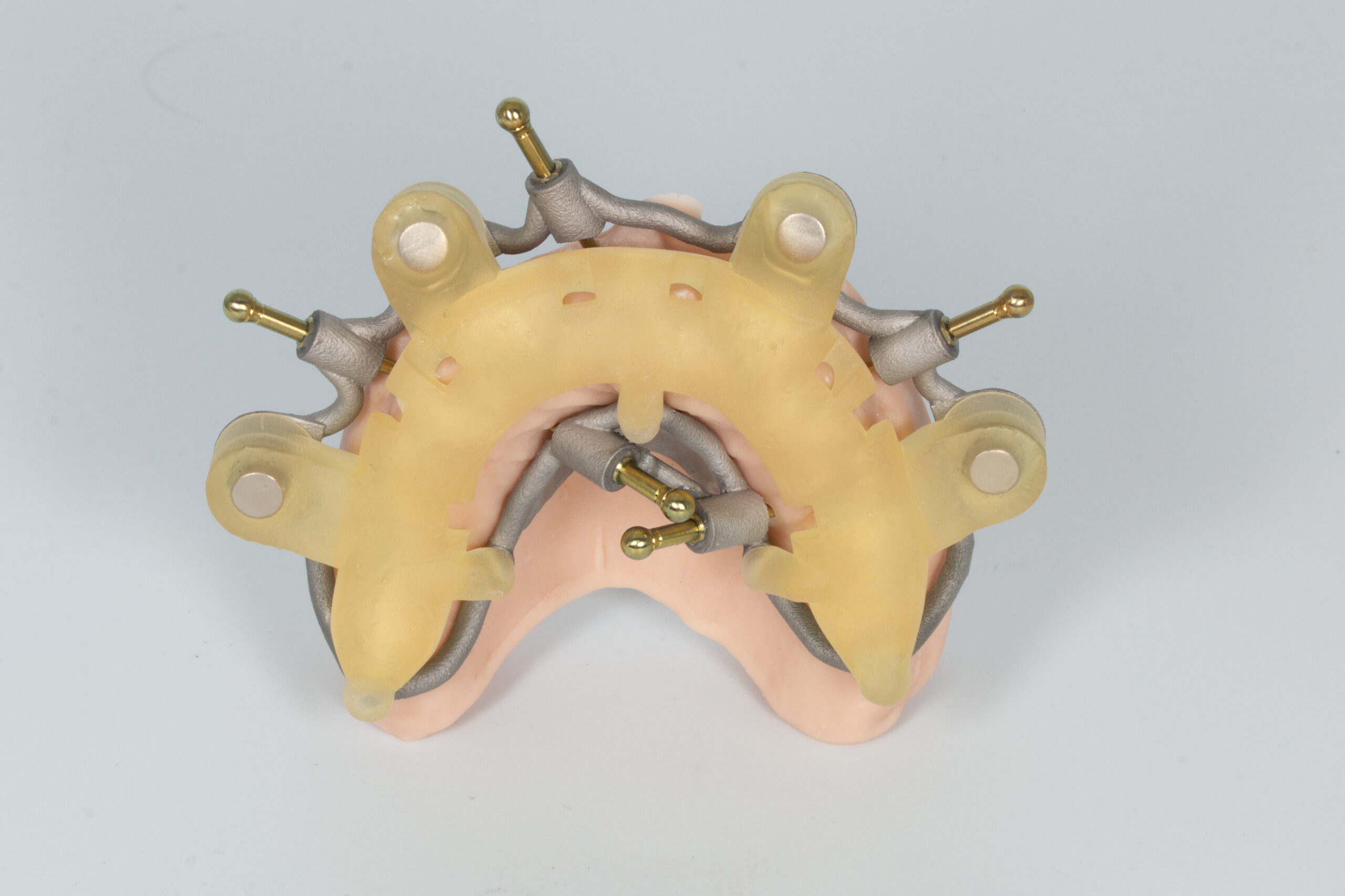
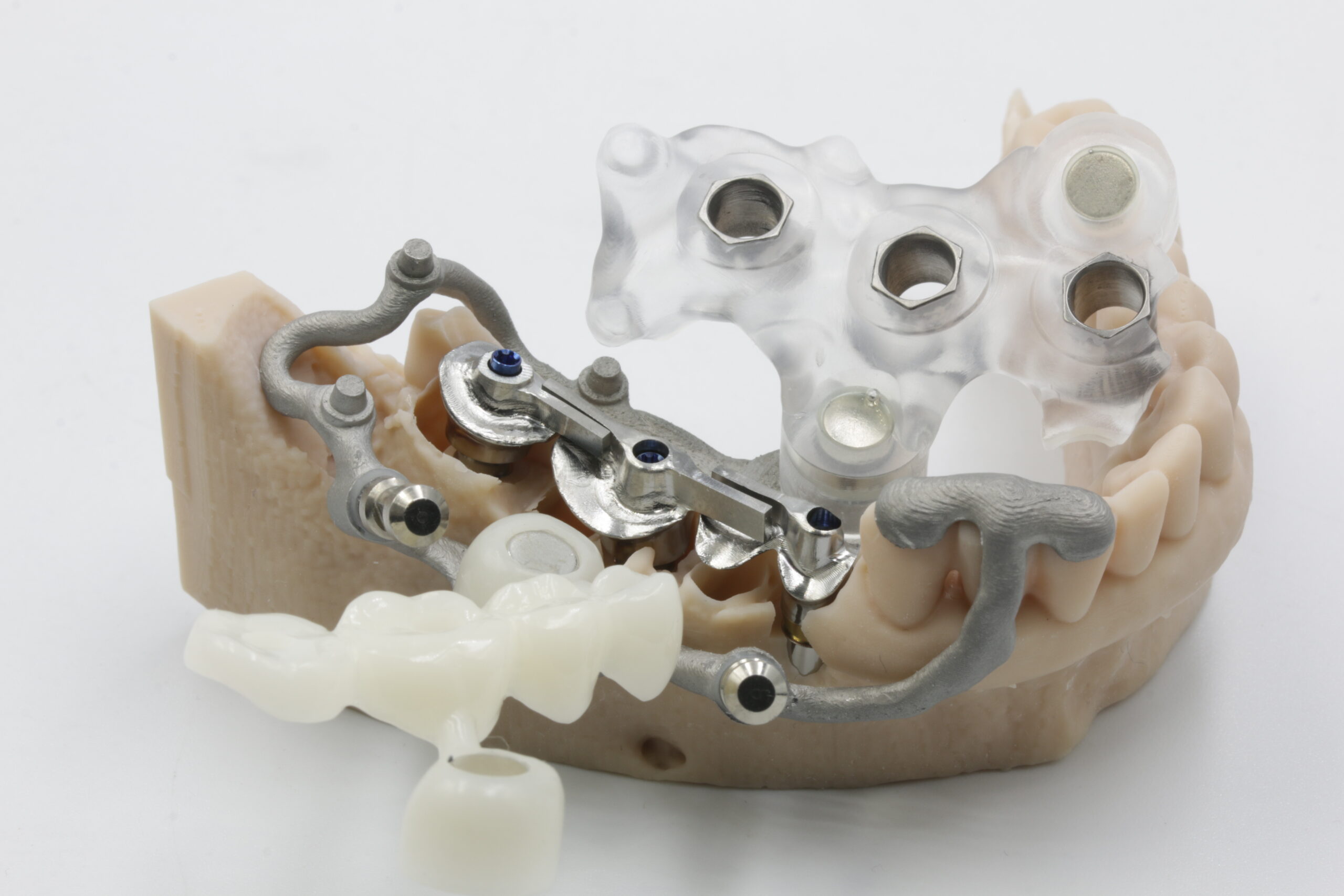
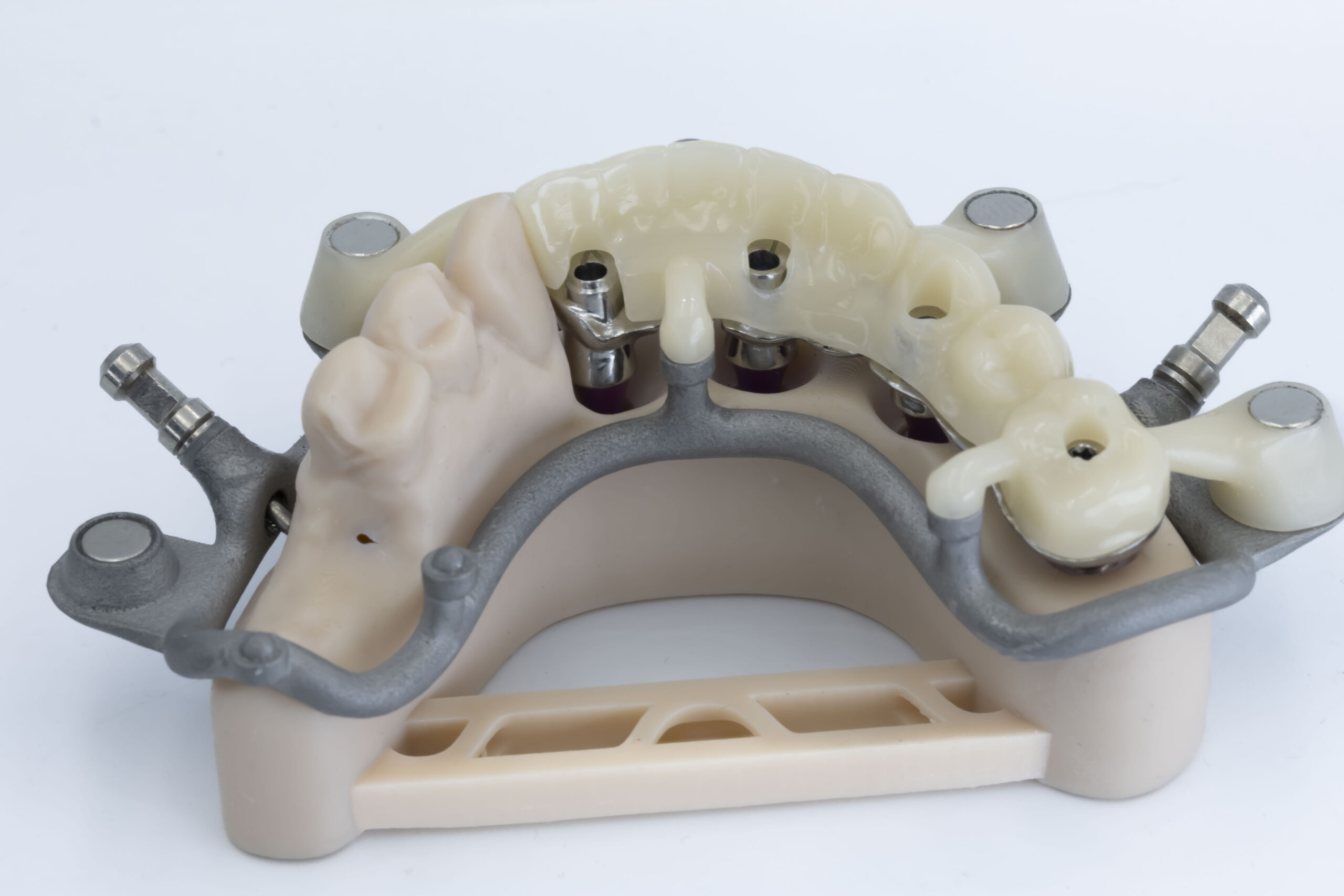
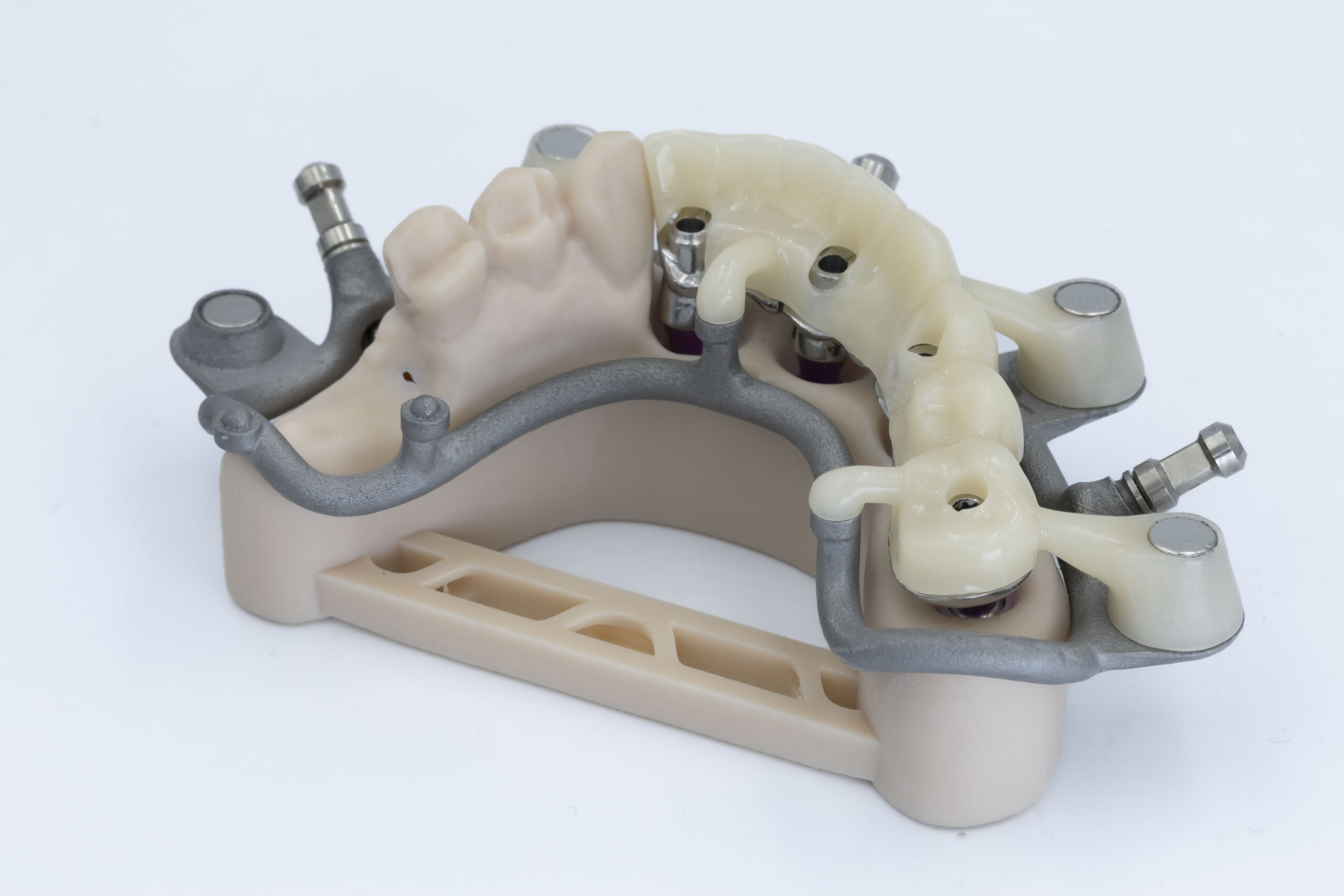
The components of a stackable guide include:
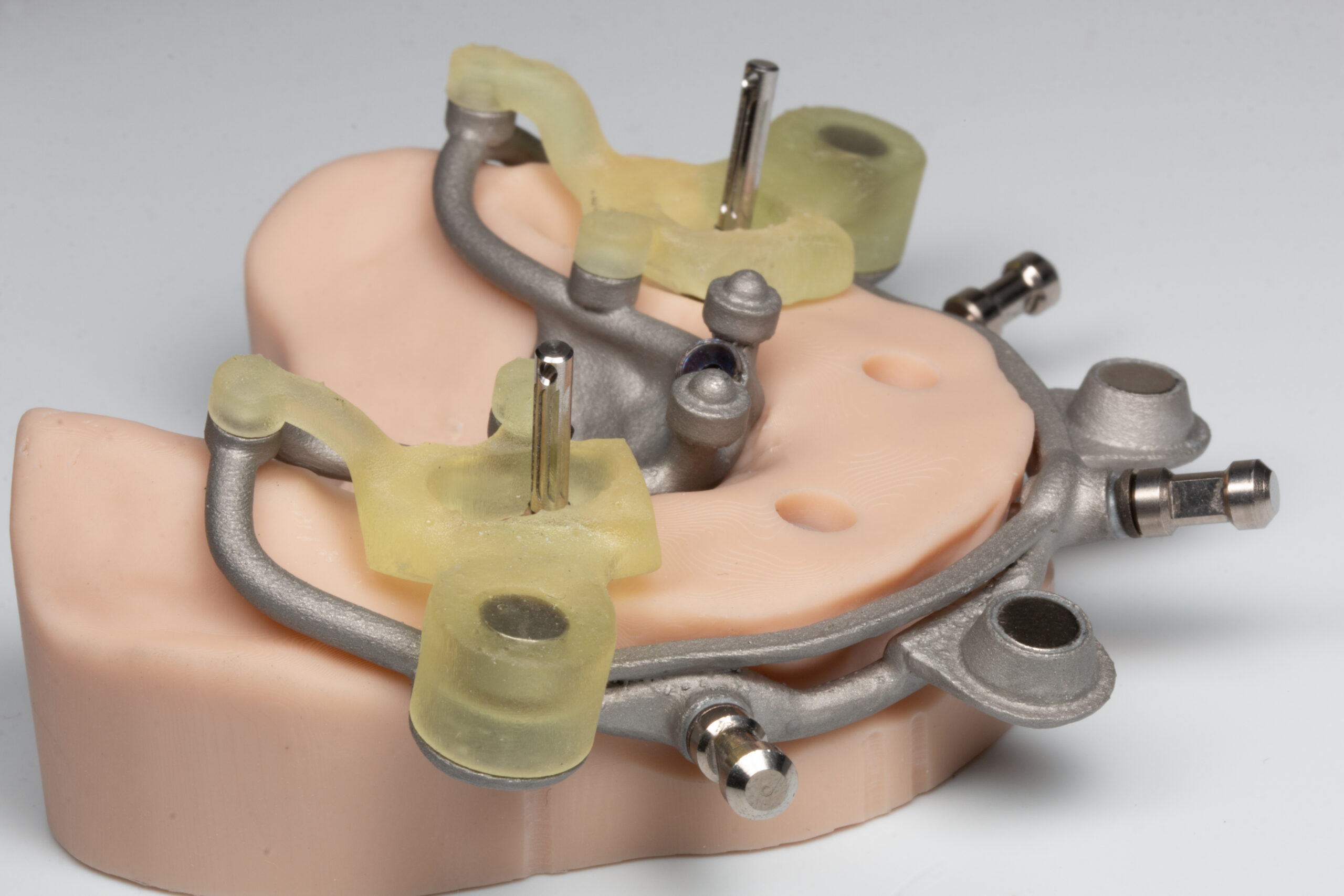
- Zero guide: The initial guide used for precise positioning.
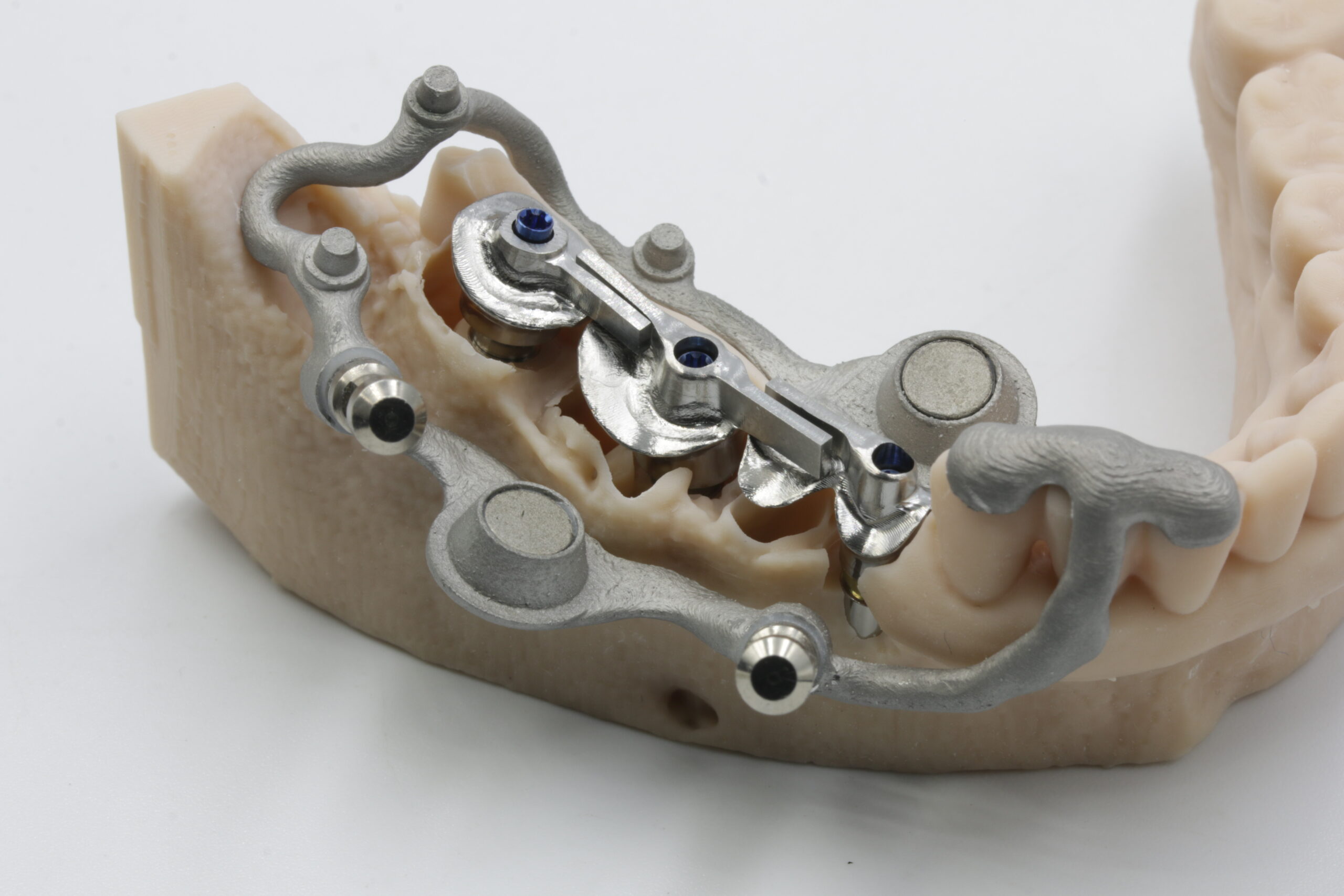
- Support frame: Provides stability and connects various guide elements.
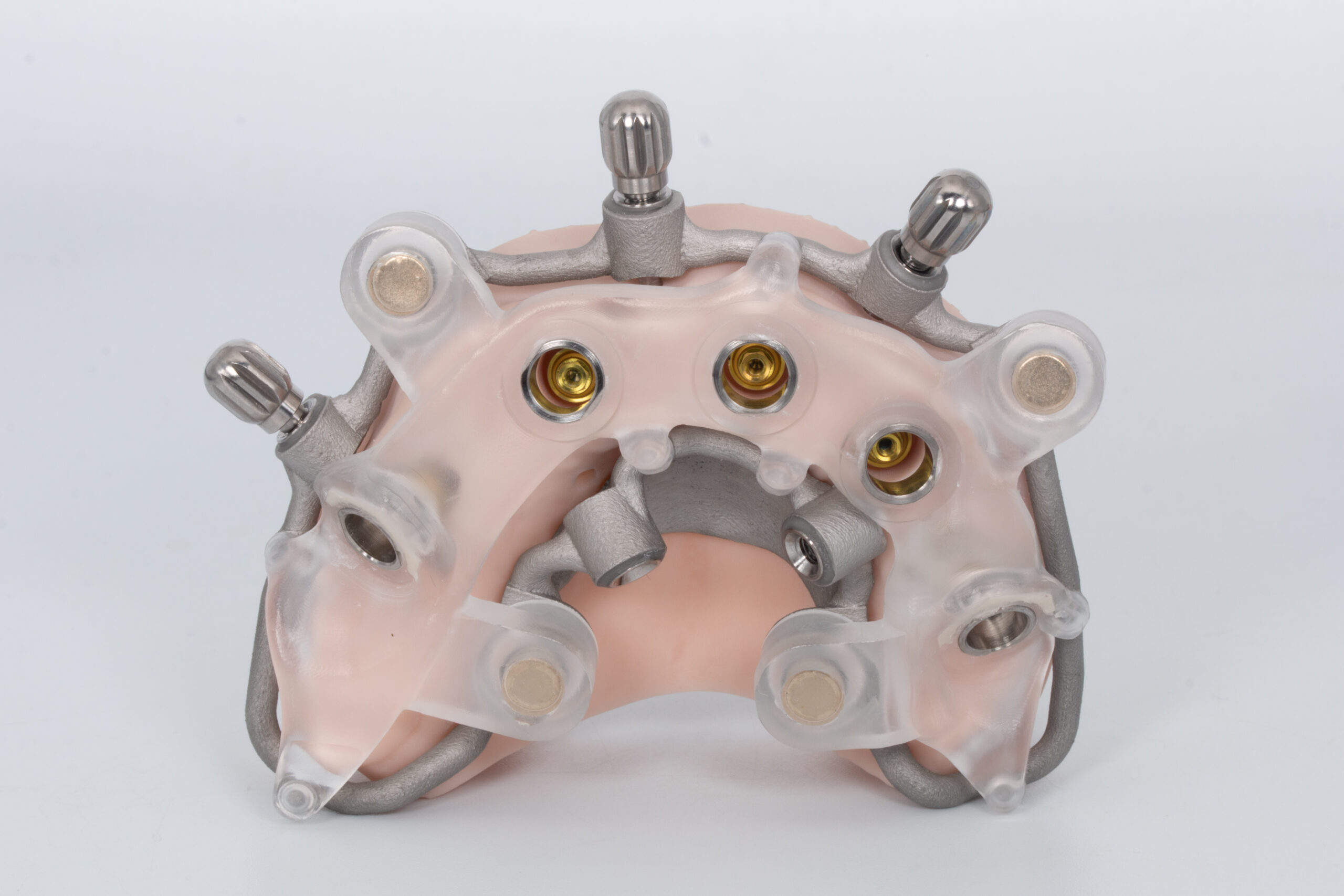
- Guide for sleeves: Holds the drilling sleeves for accurate implant placement.
- Guide for bone reduction: Used when bone reshaping is necessary before implant placement.
- Guide for angled multi-units: Specifically designed for accurate placement of angled multi-unit abutments.
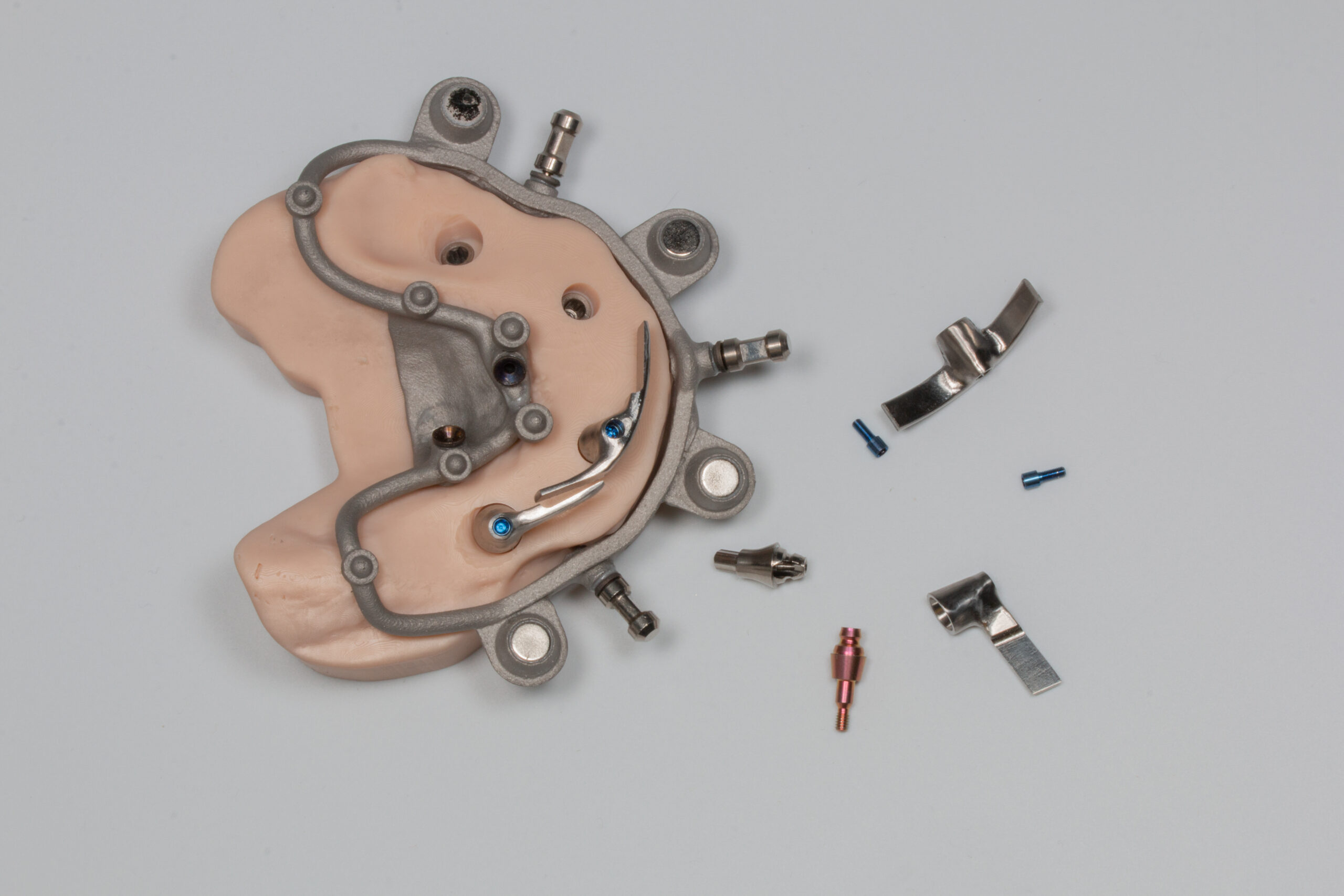
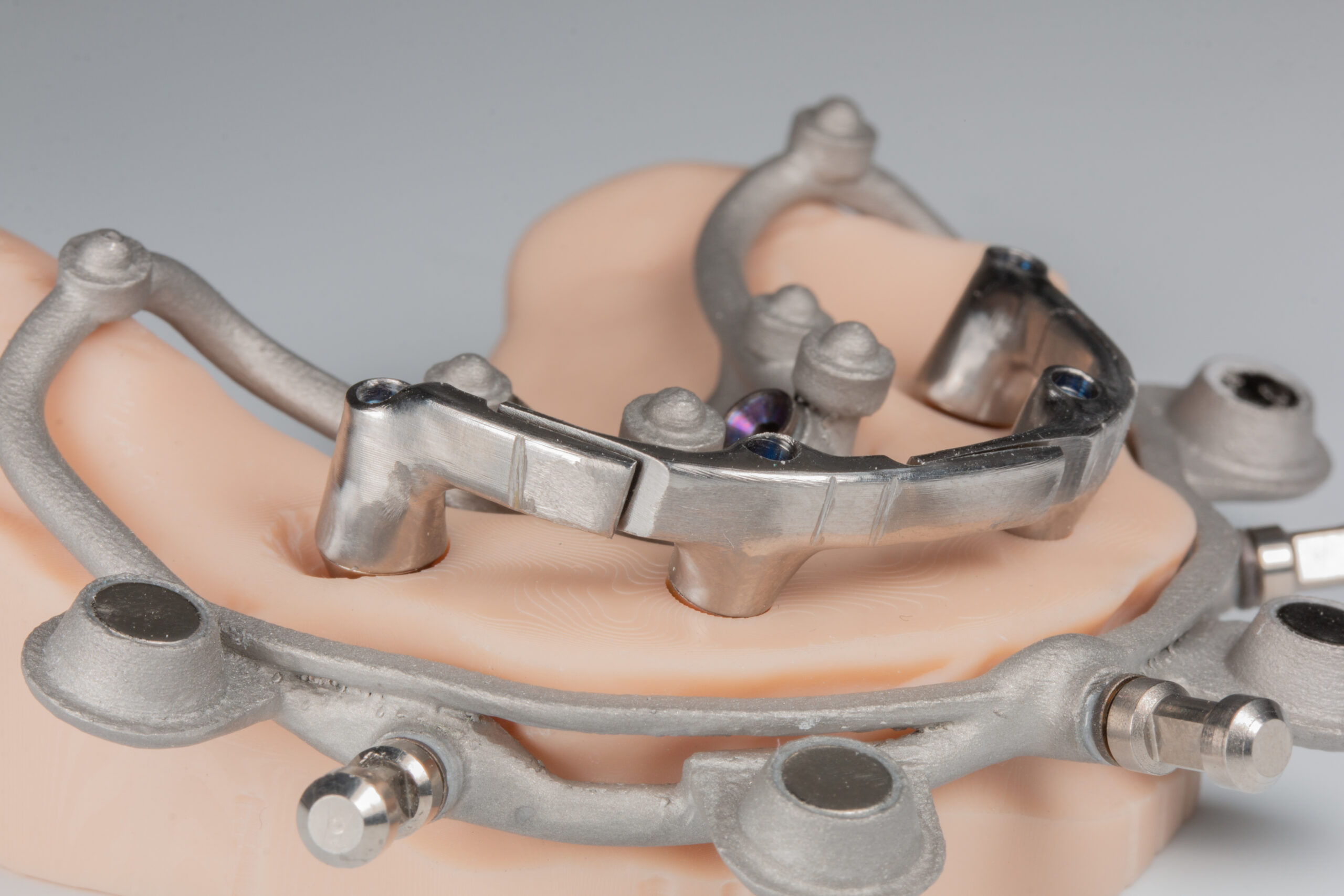
- Stackable bar: A sectional bar that can be assembled for specific surgical steps.
5 Assembly of All Elements, Verification, Dispatch of the Kit
We meticulously check all components, sandblast the bar for a more reliable fixation, mount the sleeves, assemble all components on models, and then send the kit to the clinic.
Intraoral Welding
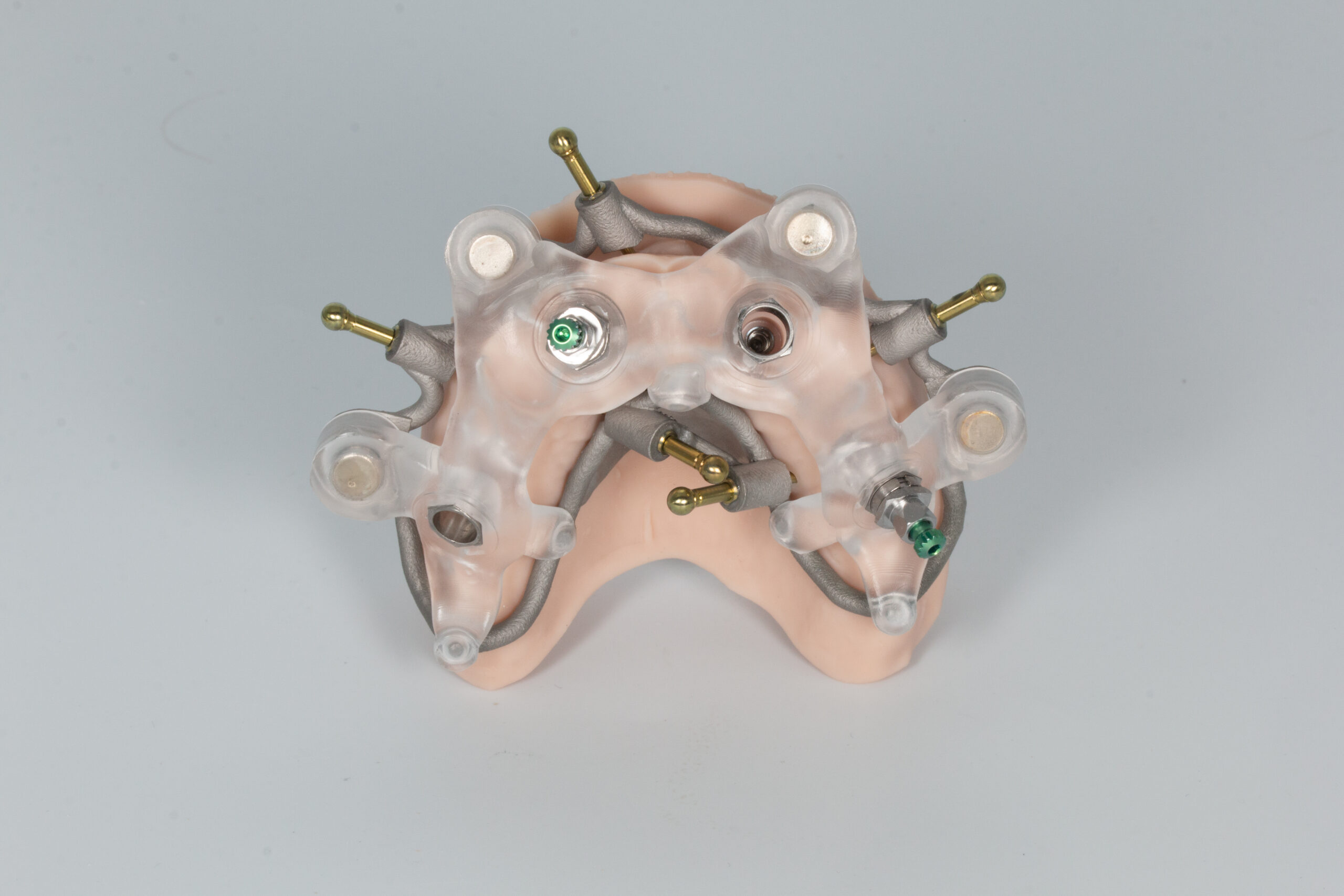
Joinplant is an intraoral welding device that connects and stabilizes immediately loaded implants, reducing chewing stress during healing.
Using copper electrodes, a titanium bar is welded to the abutments directly in the oral cavity. A short electrical discharge (a few milliseconds) creates a strong connection without overheating the tissues.
This rigid fixation minimizes stress and micromovement of the implants, promoting their stability in the early stages of osseointegration. The procedure is safe for the patient, as the clamps automatically disconnect from the power supply, and heat is efficiently dissipated through the copper electrodes.
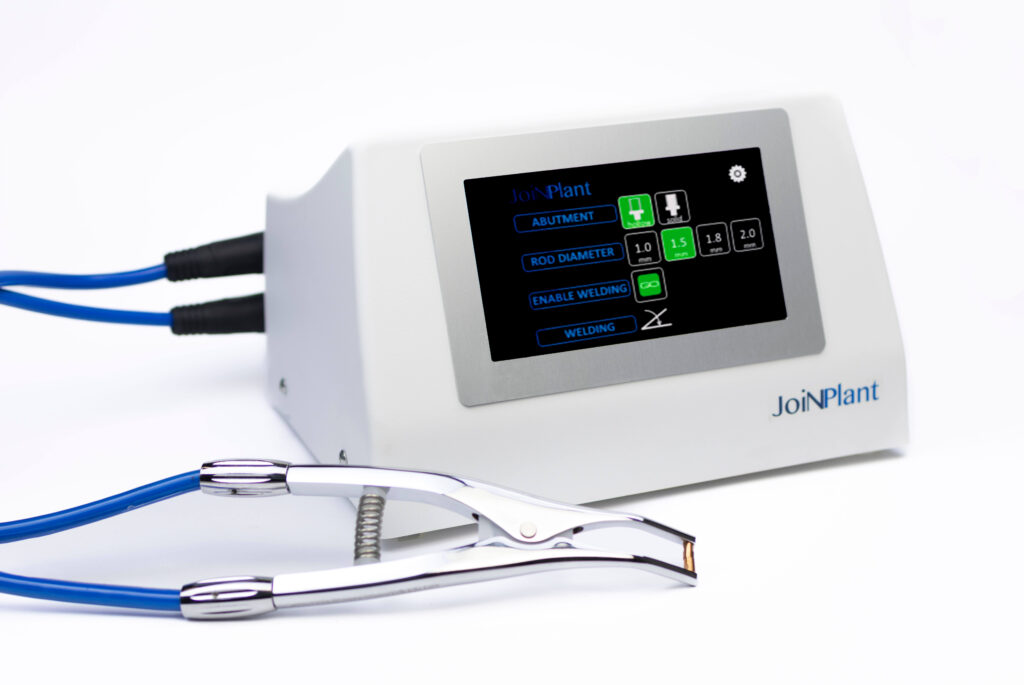
Components
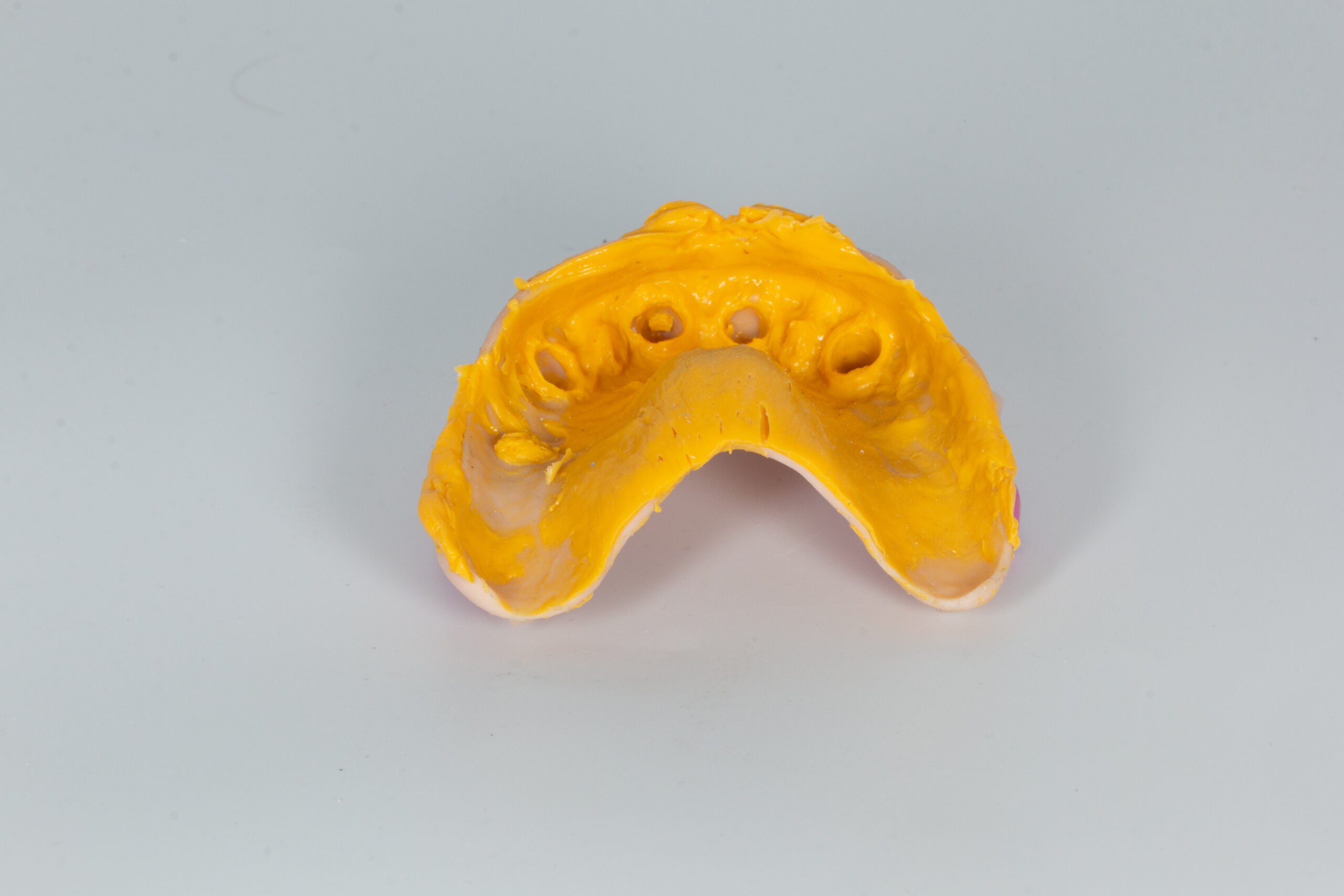
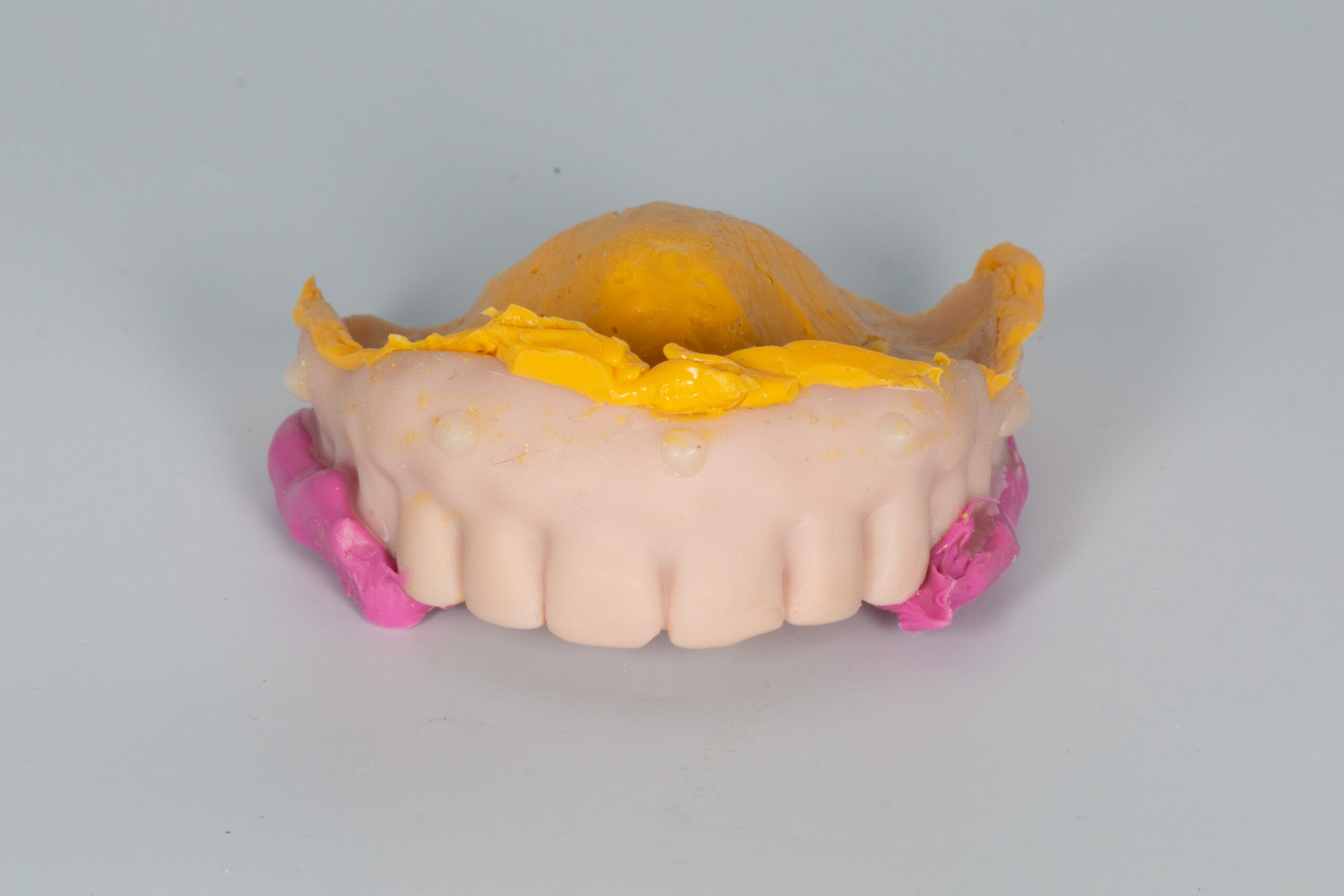
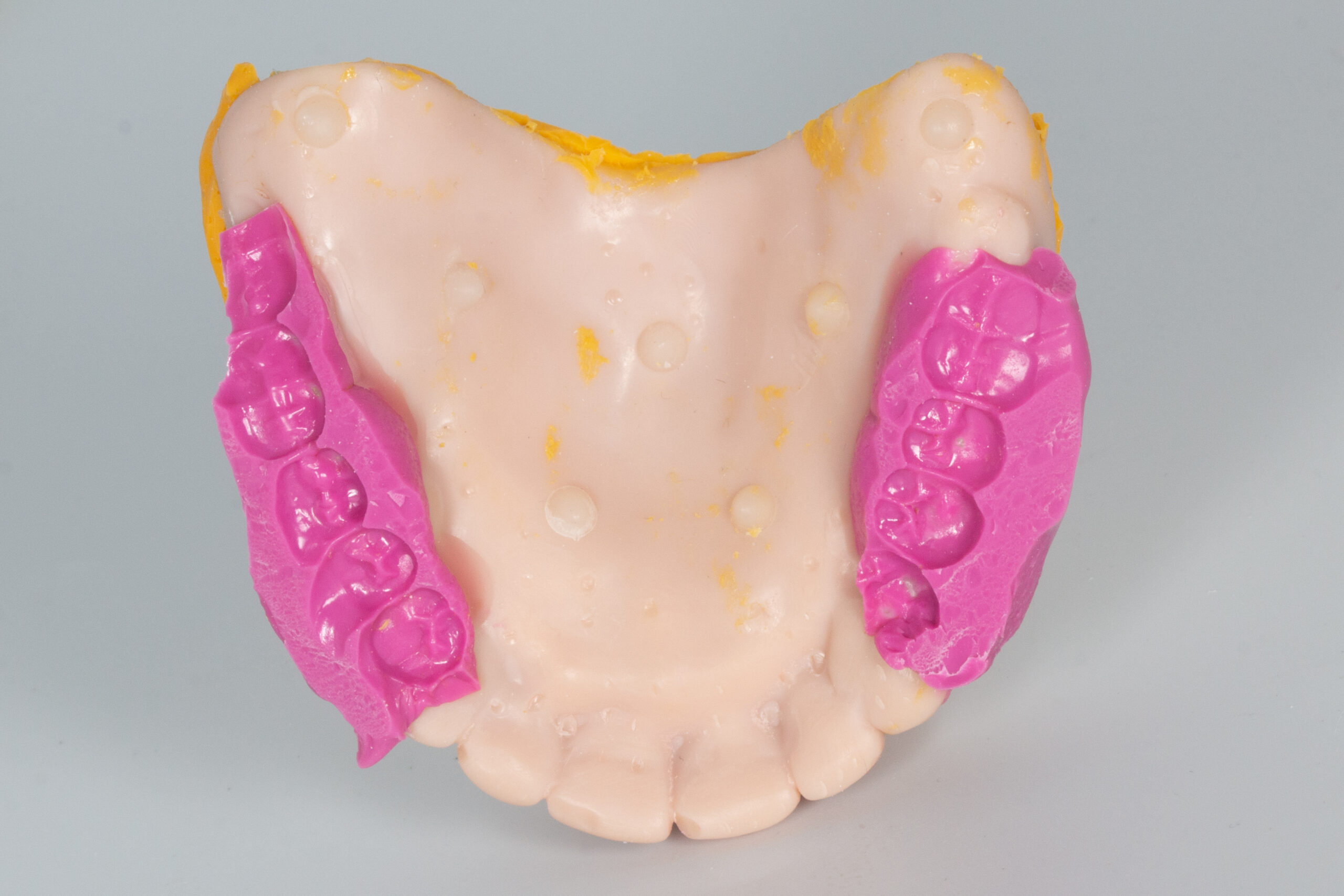
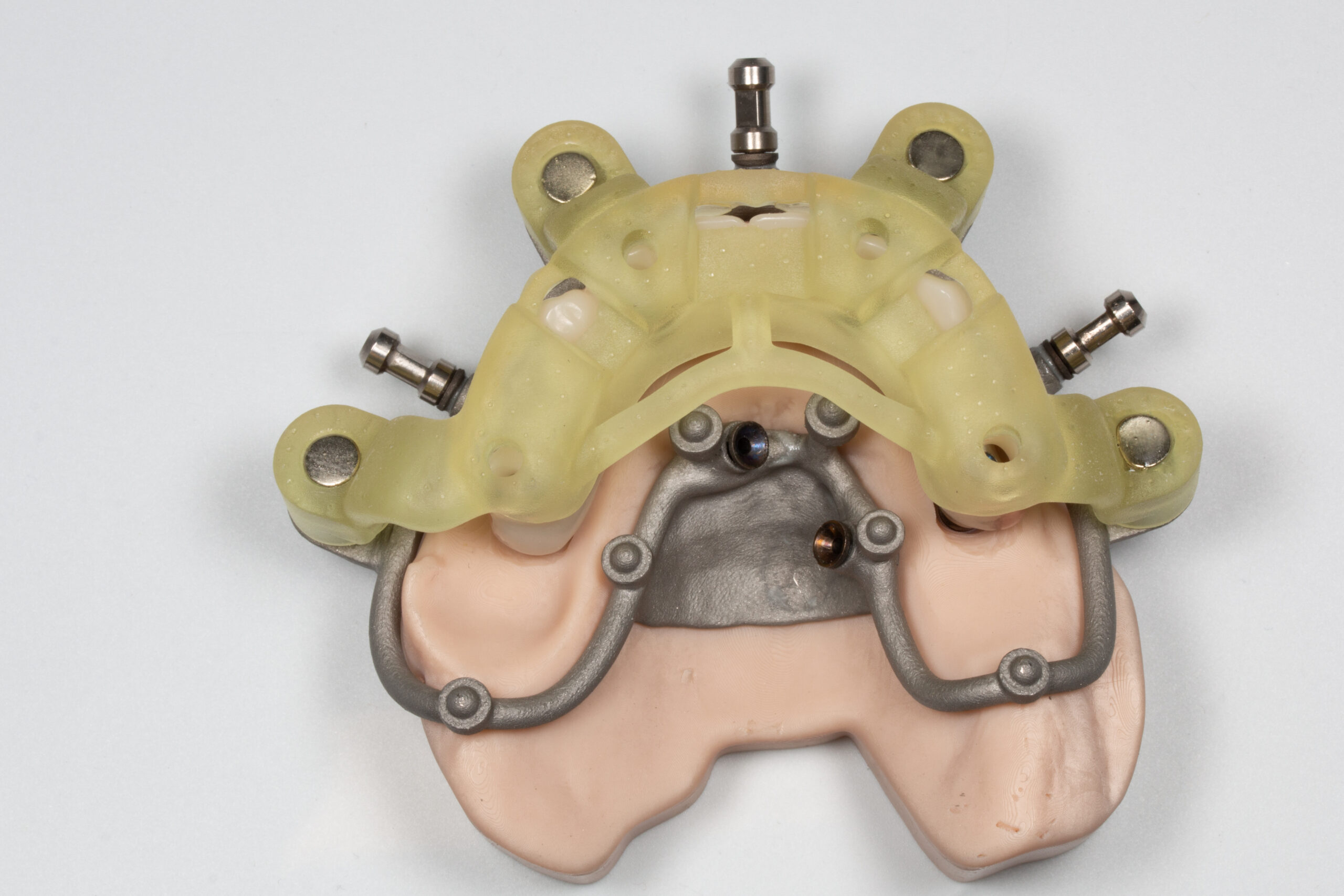
1. Double scan tray
This instrument is designed for creating X-rays and scanning with an intraoral scanner in cases where stable teeth or fixed metal-ceramic/zirconia crowns are absent, for correct alignment.
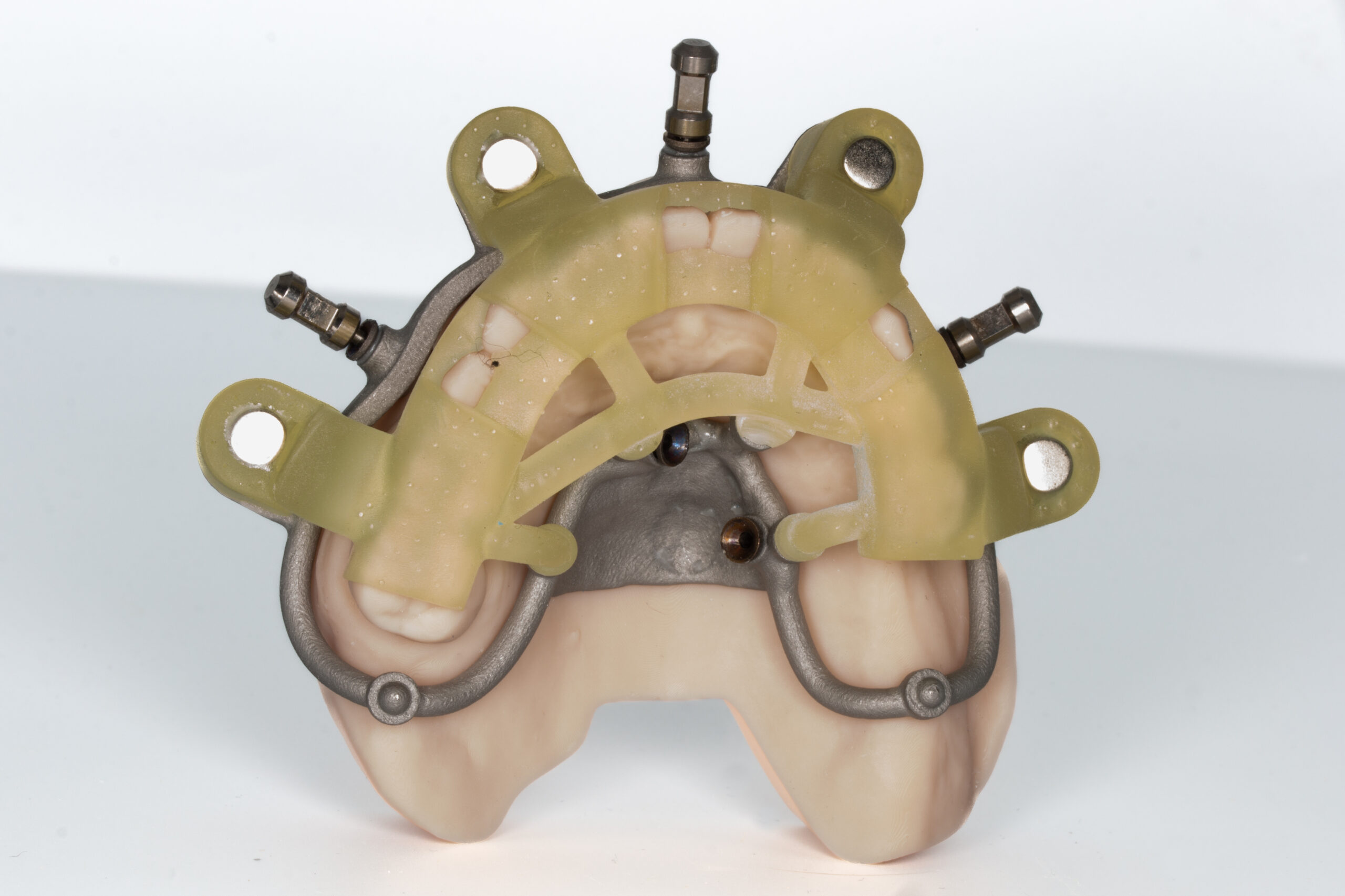
2. Zero Guide
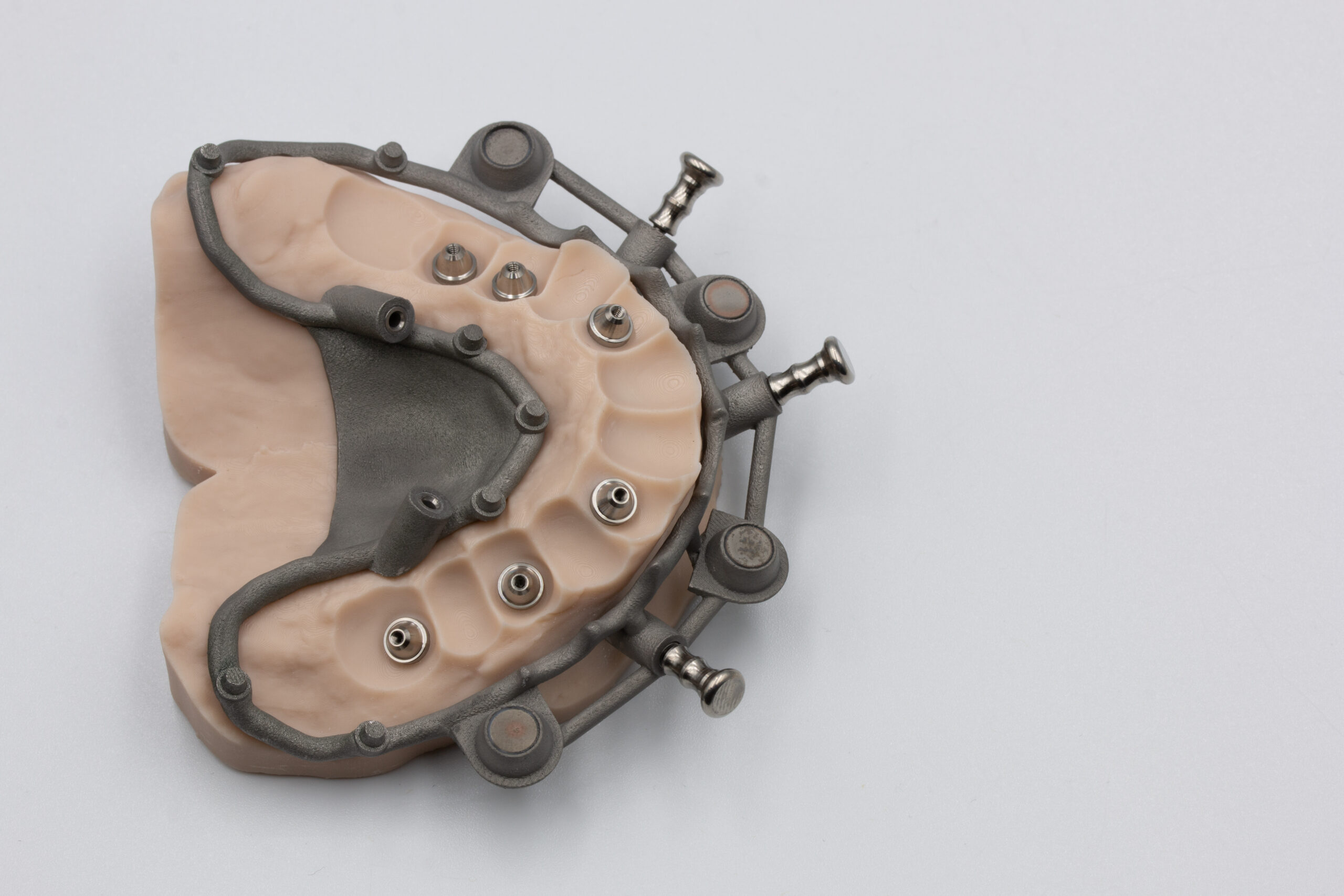
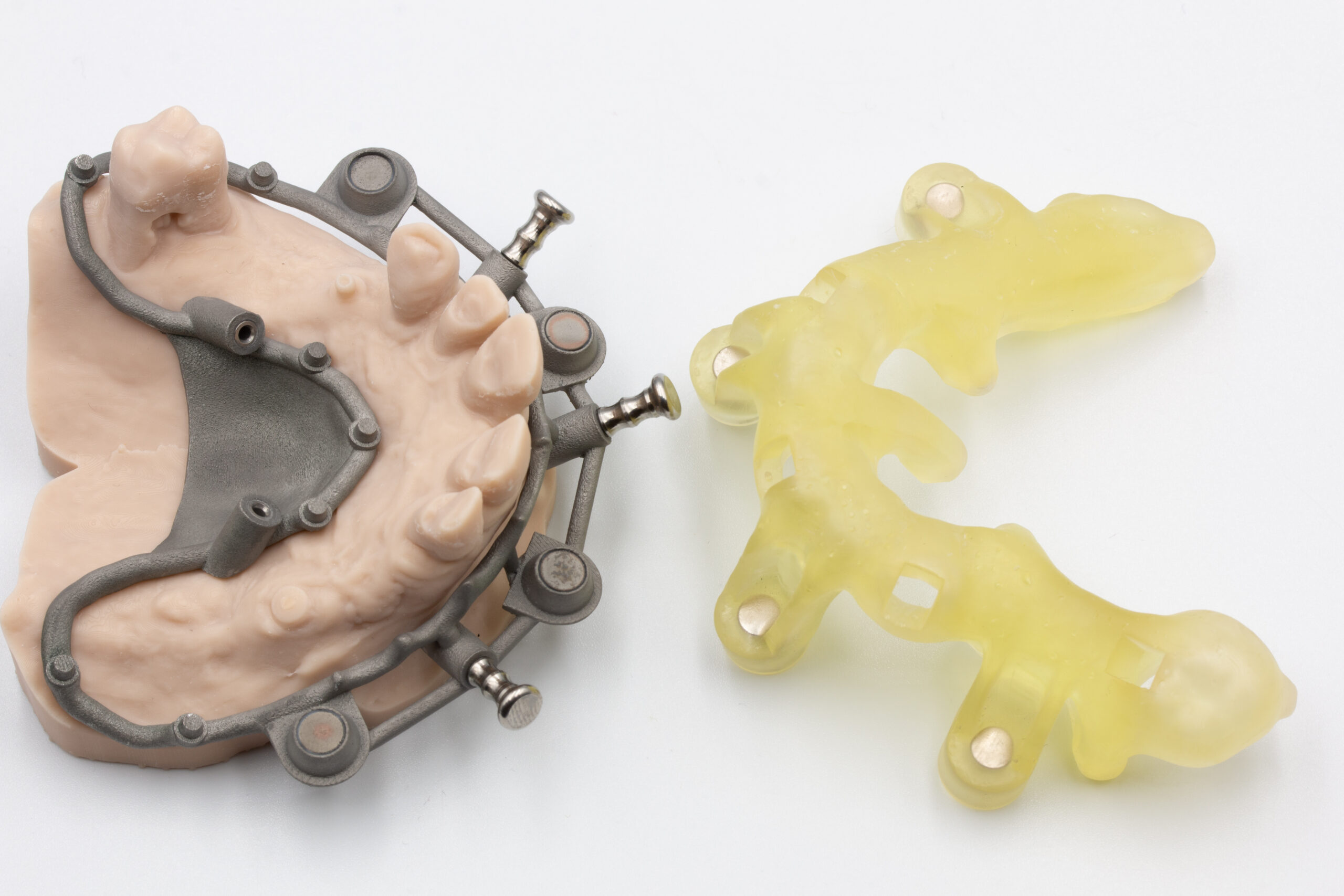
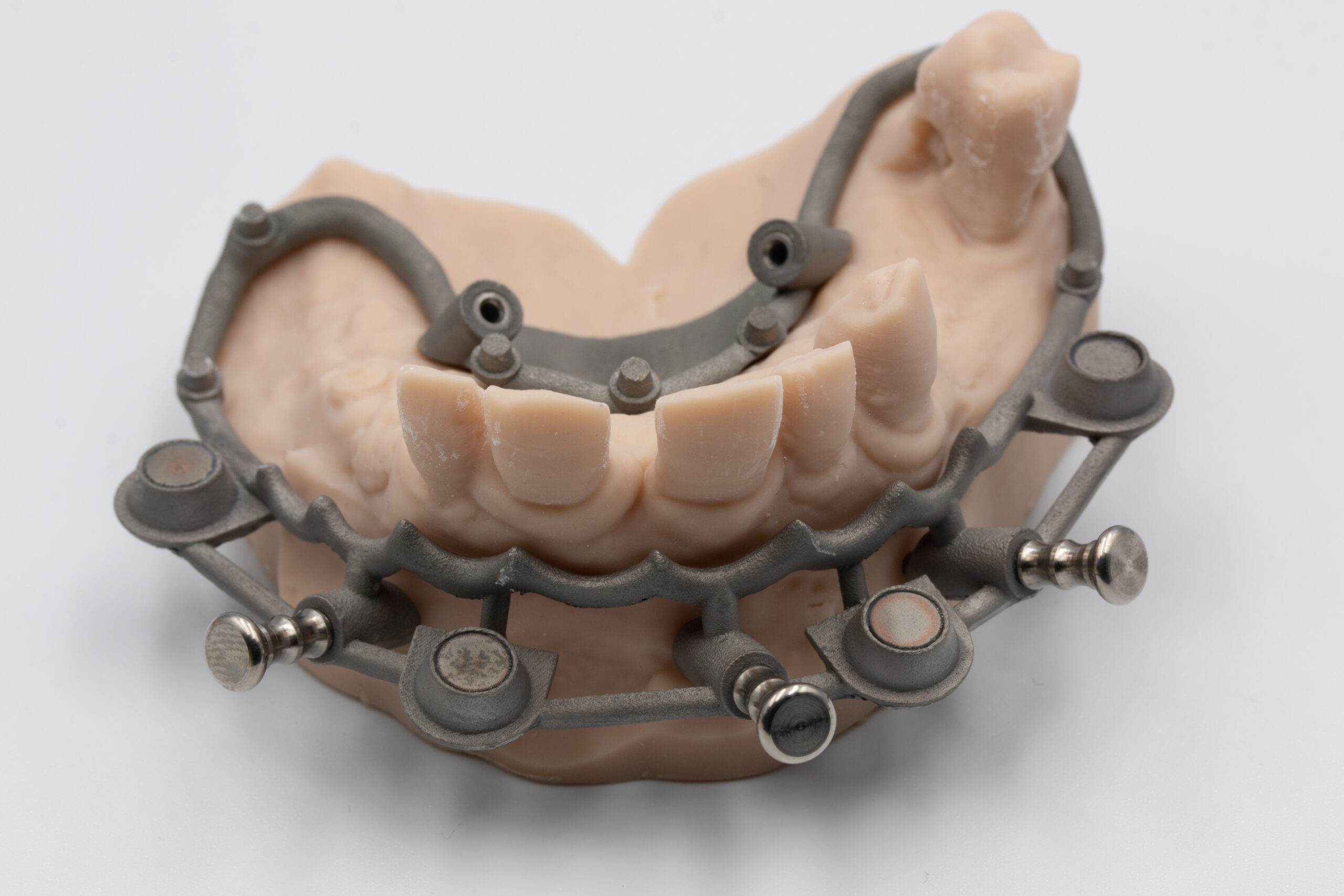
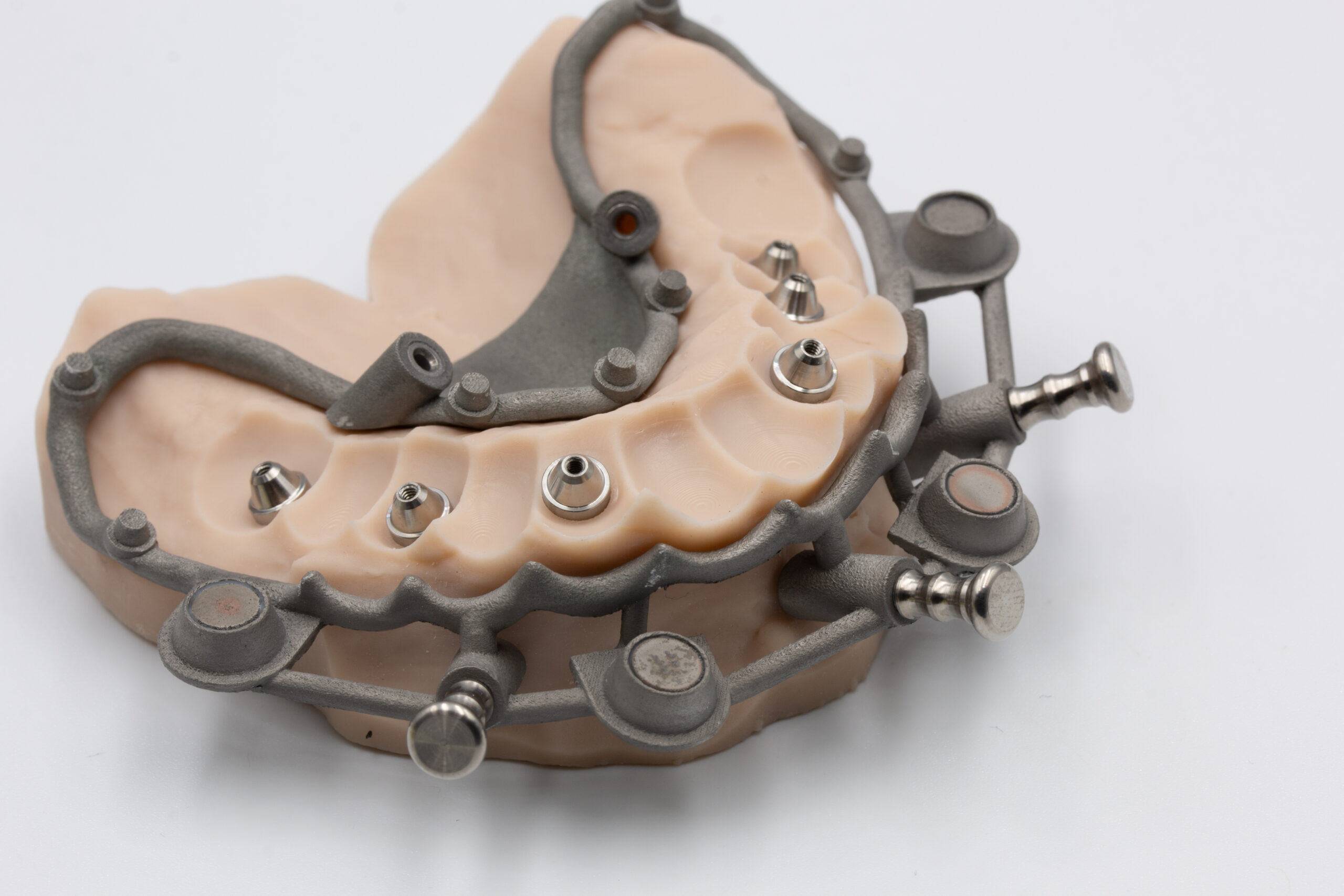
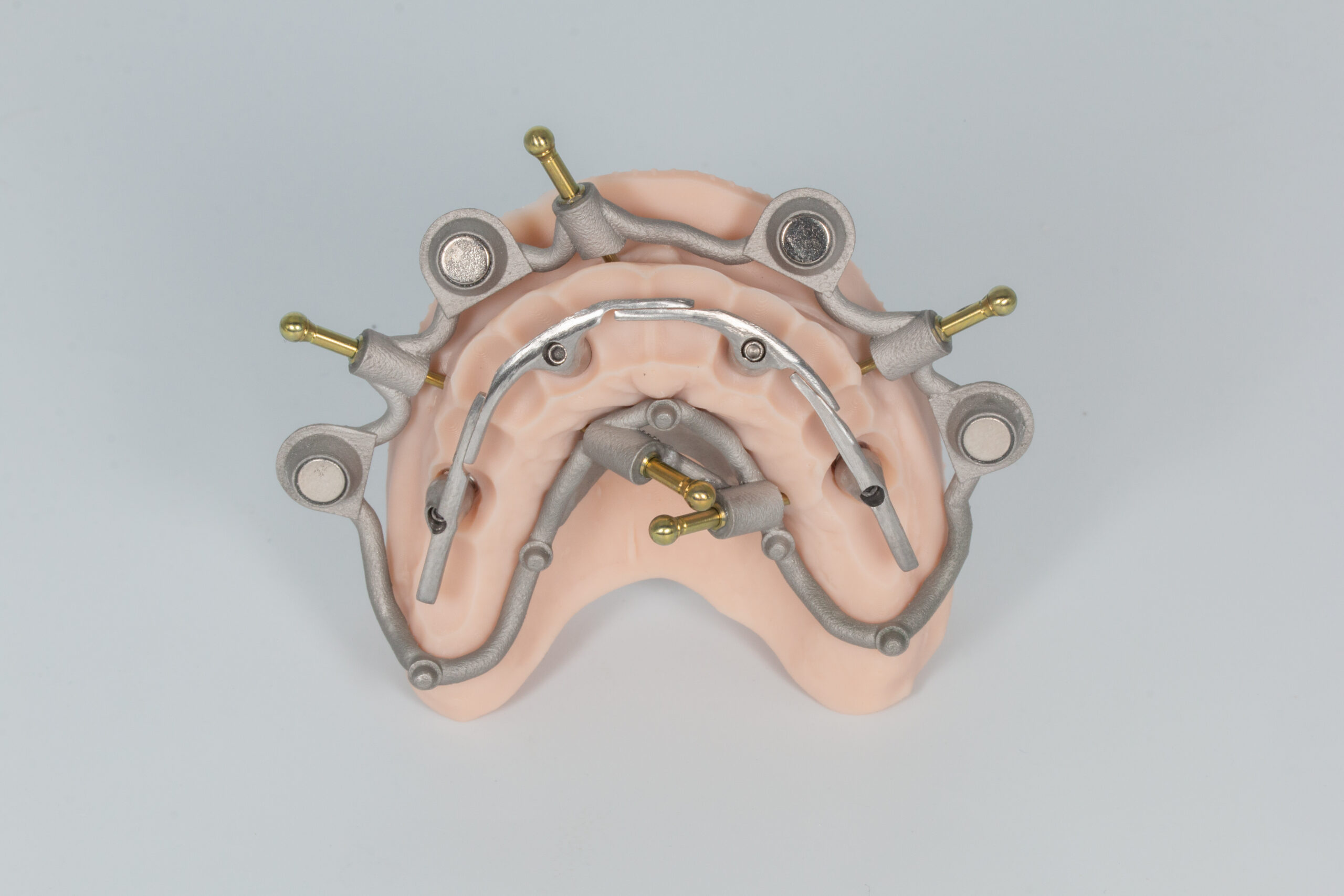
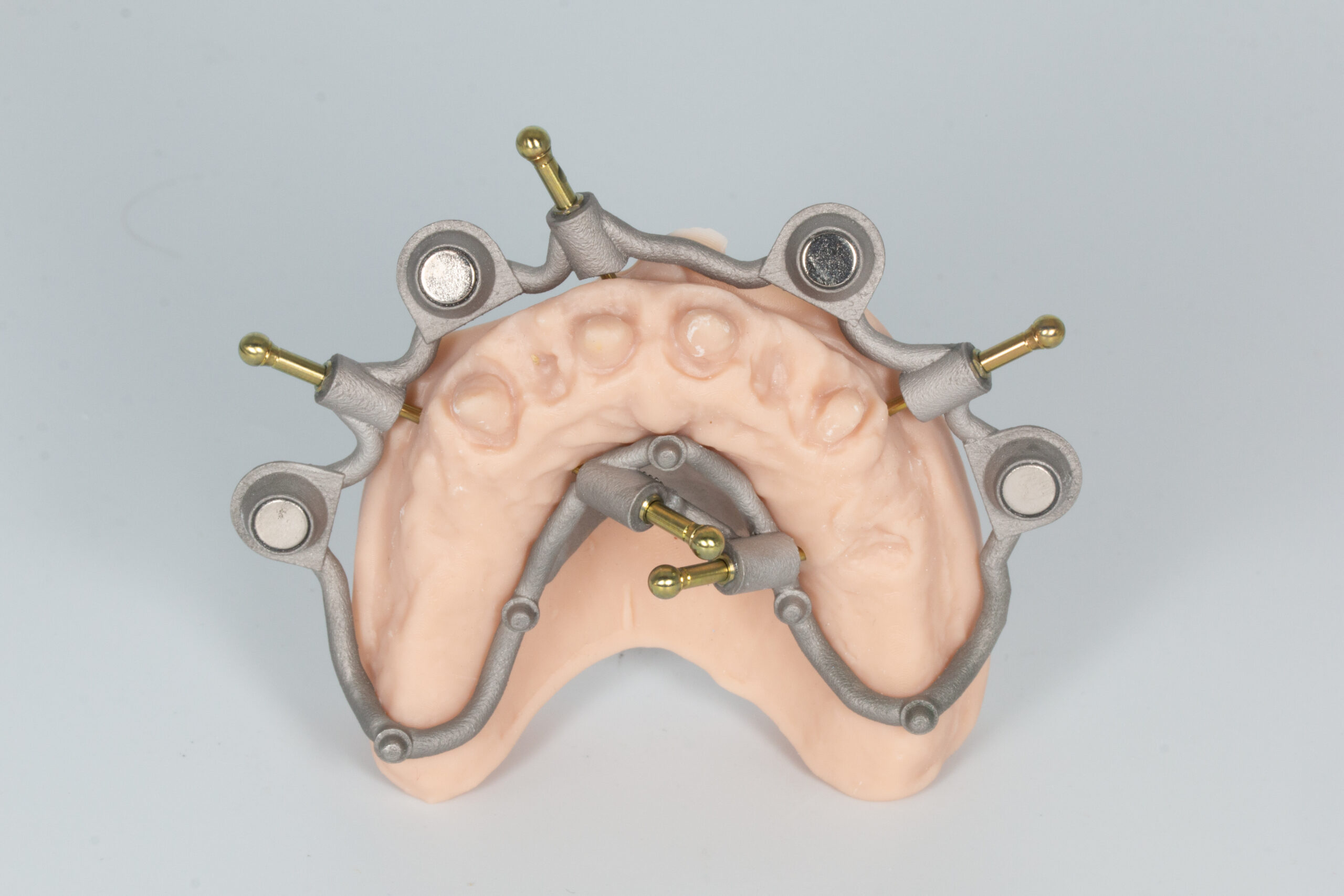
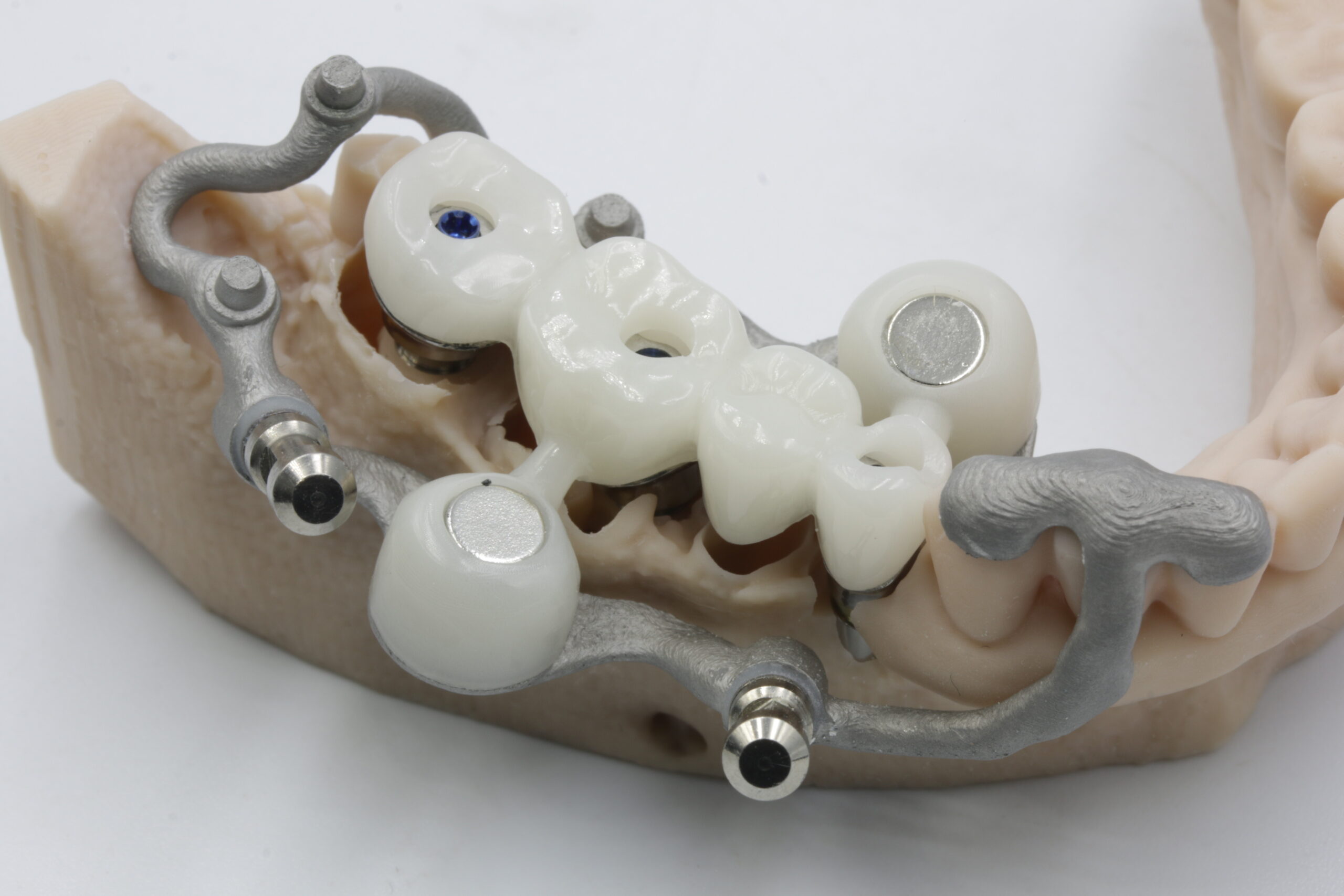
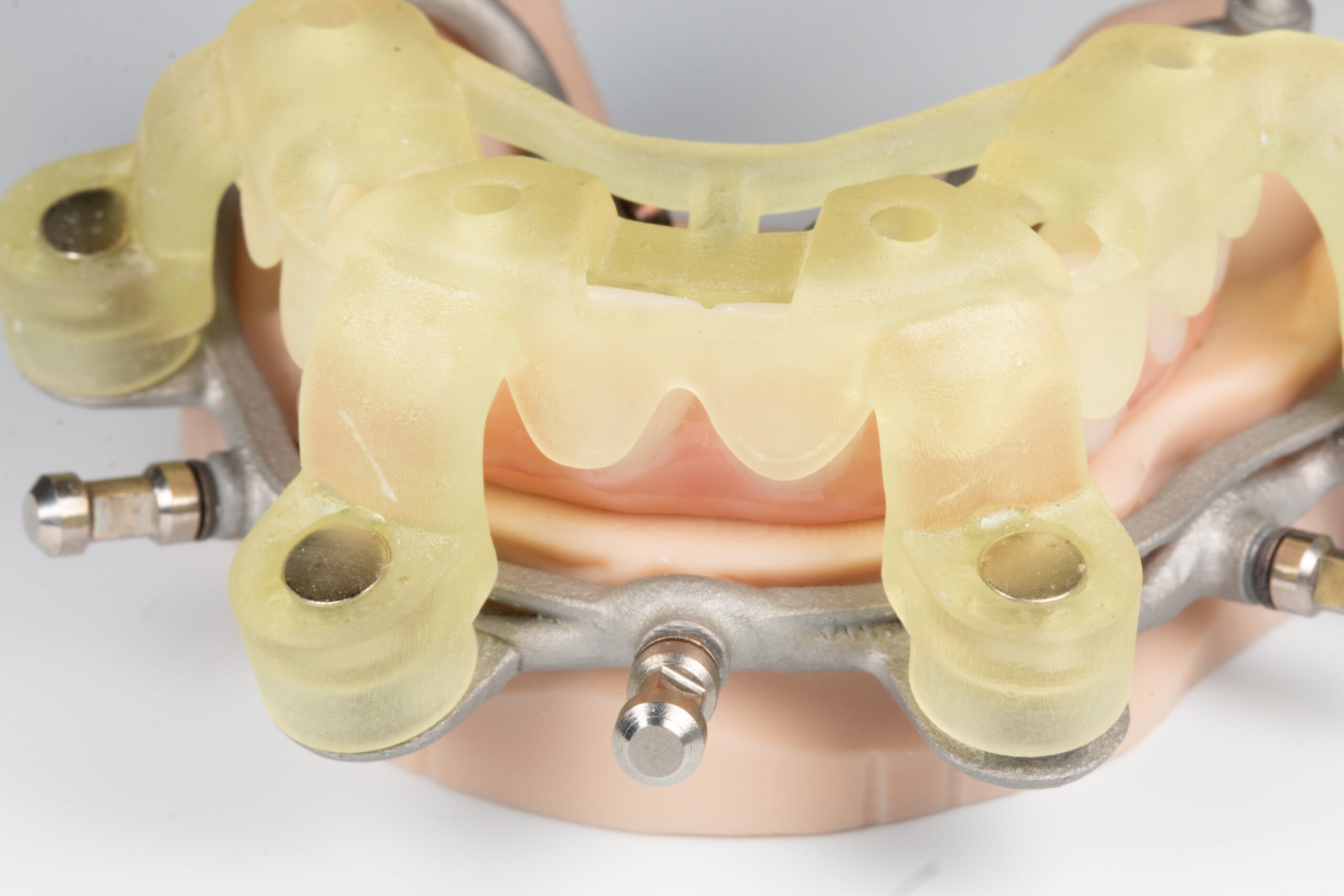
The zero guide helps to install the base metal framework in the planned position.
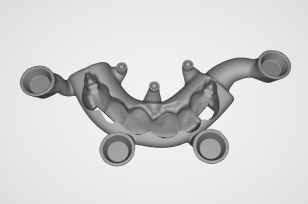
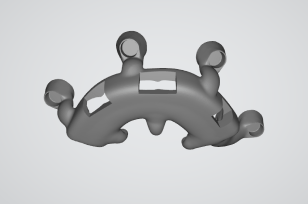
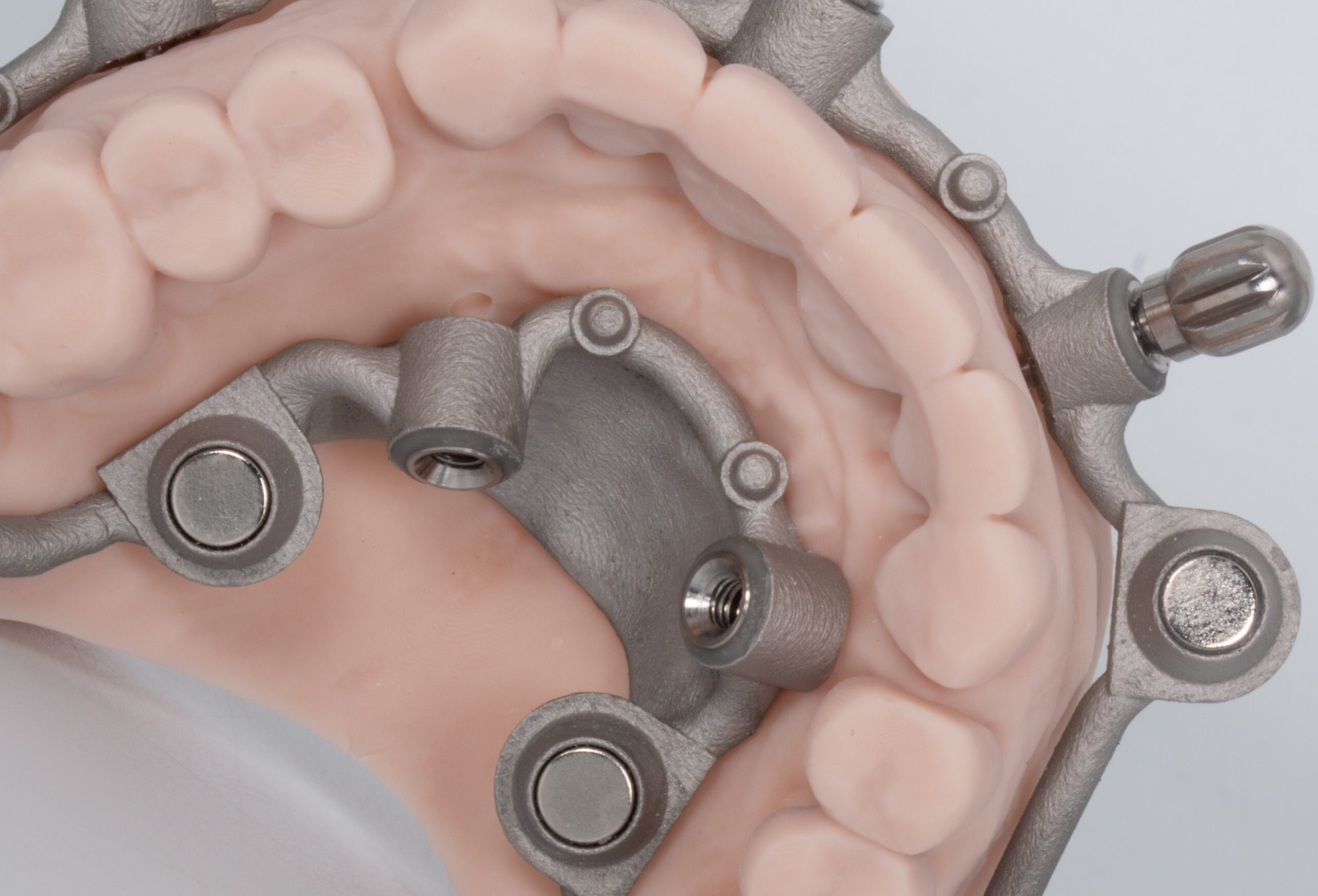
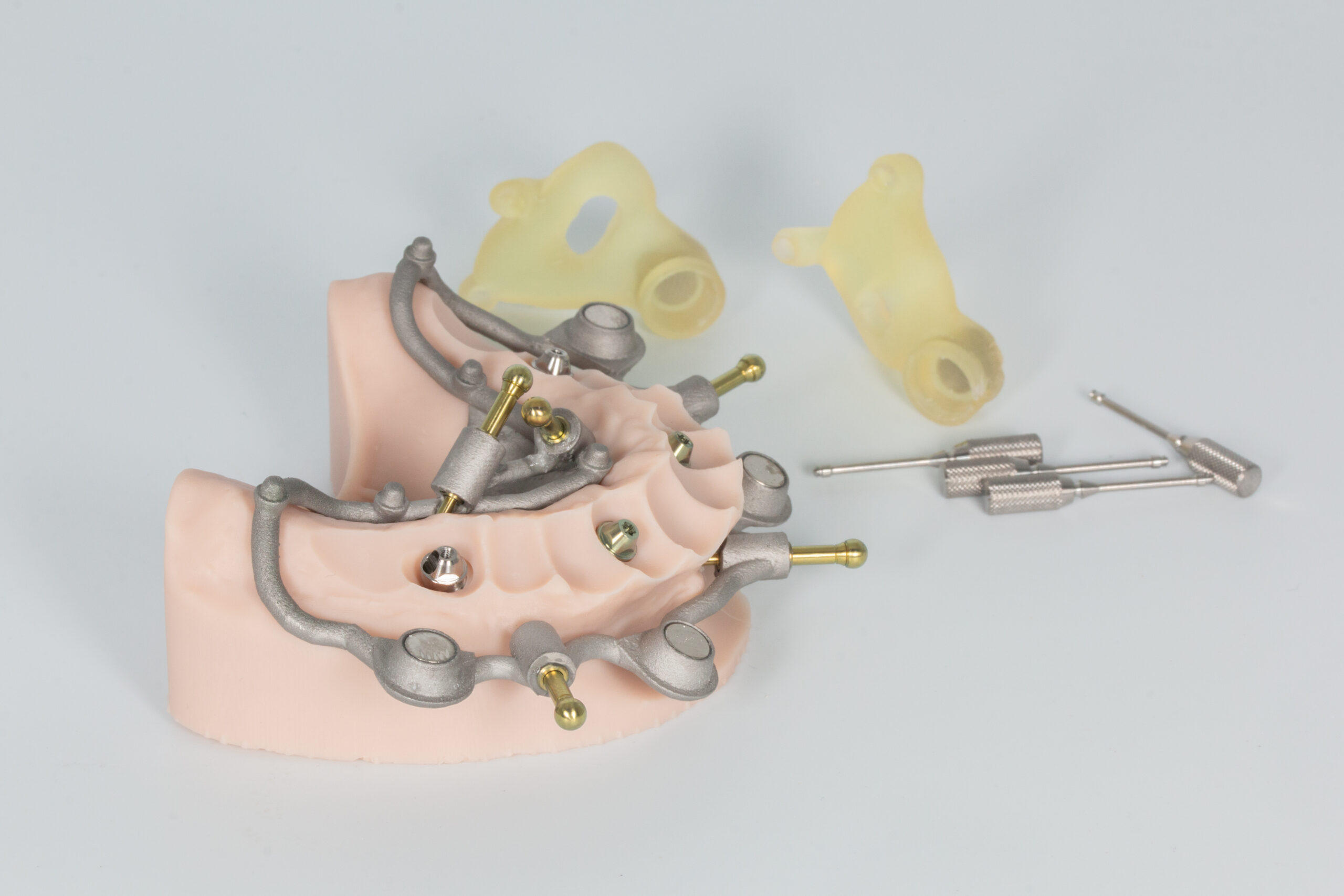
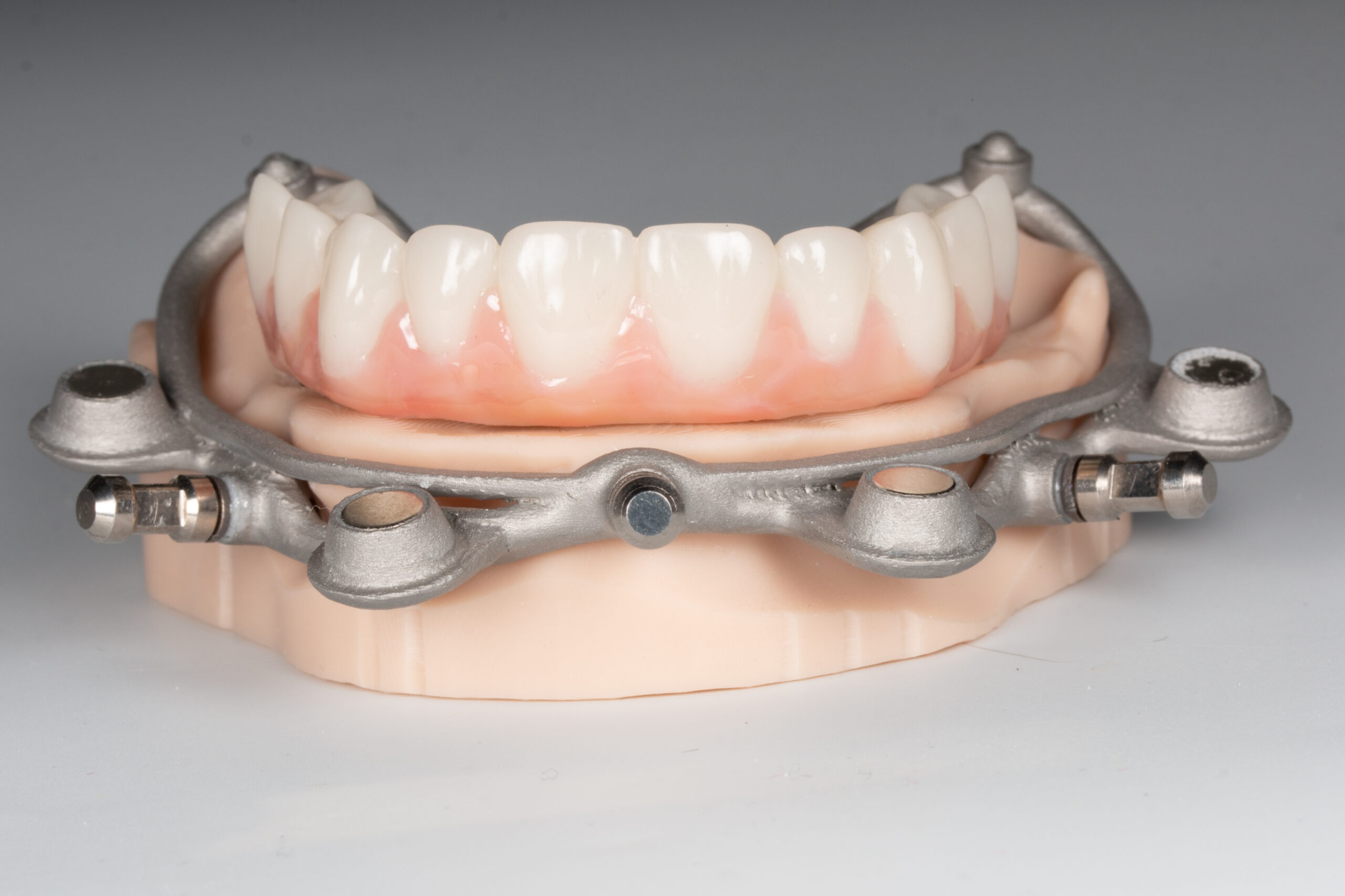
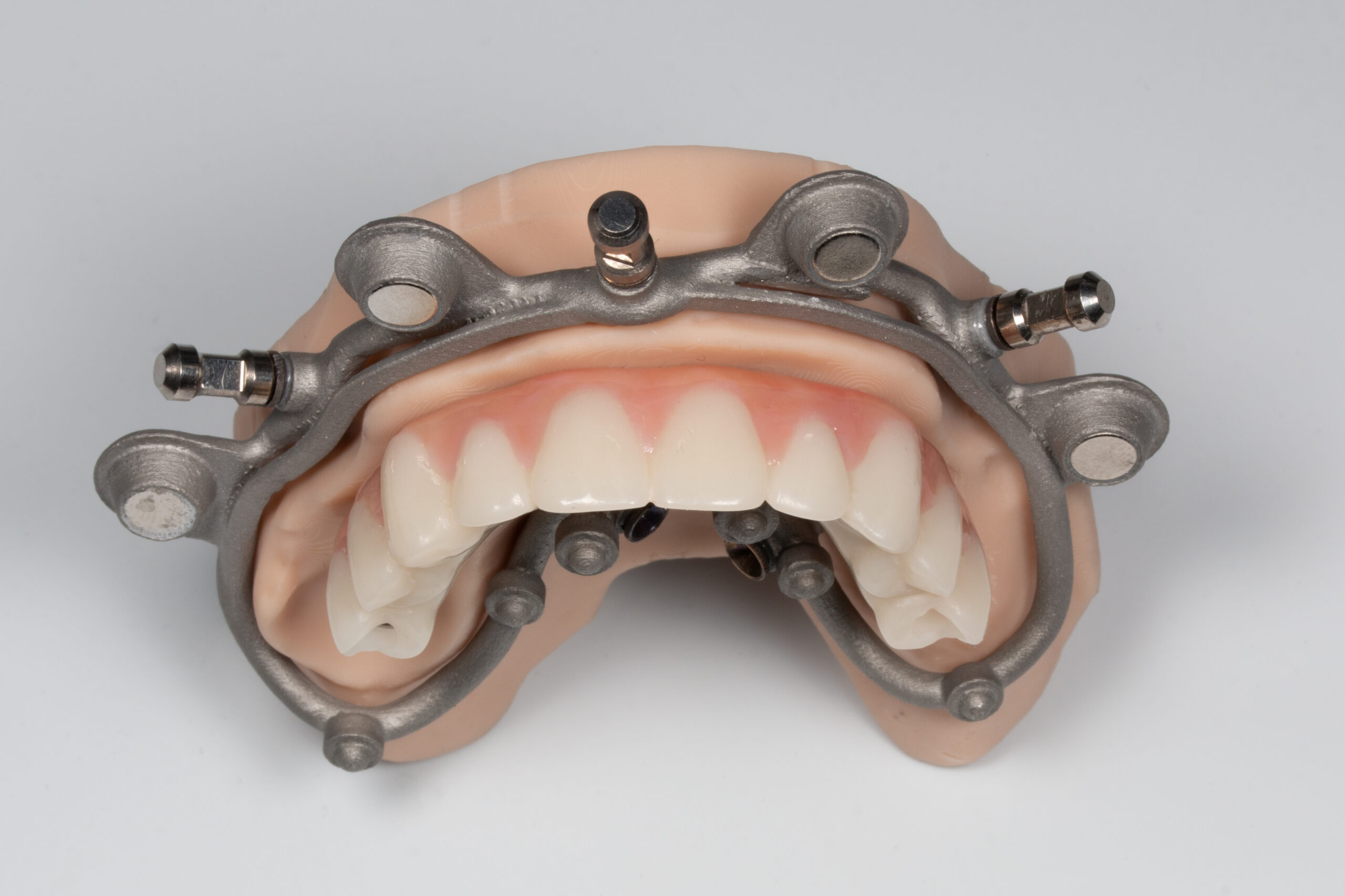
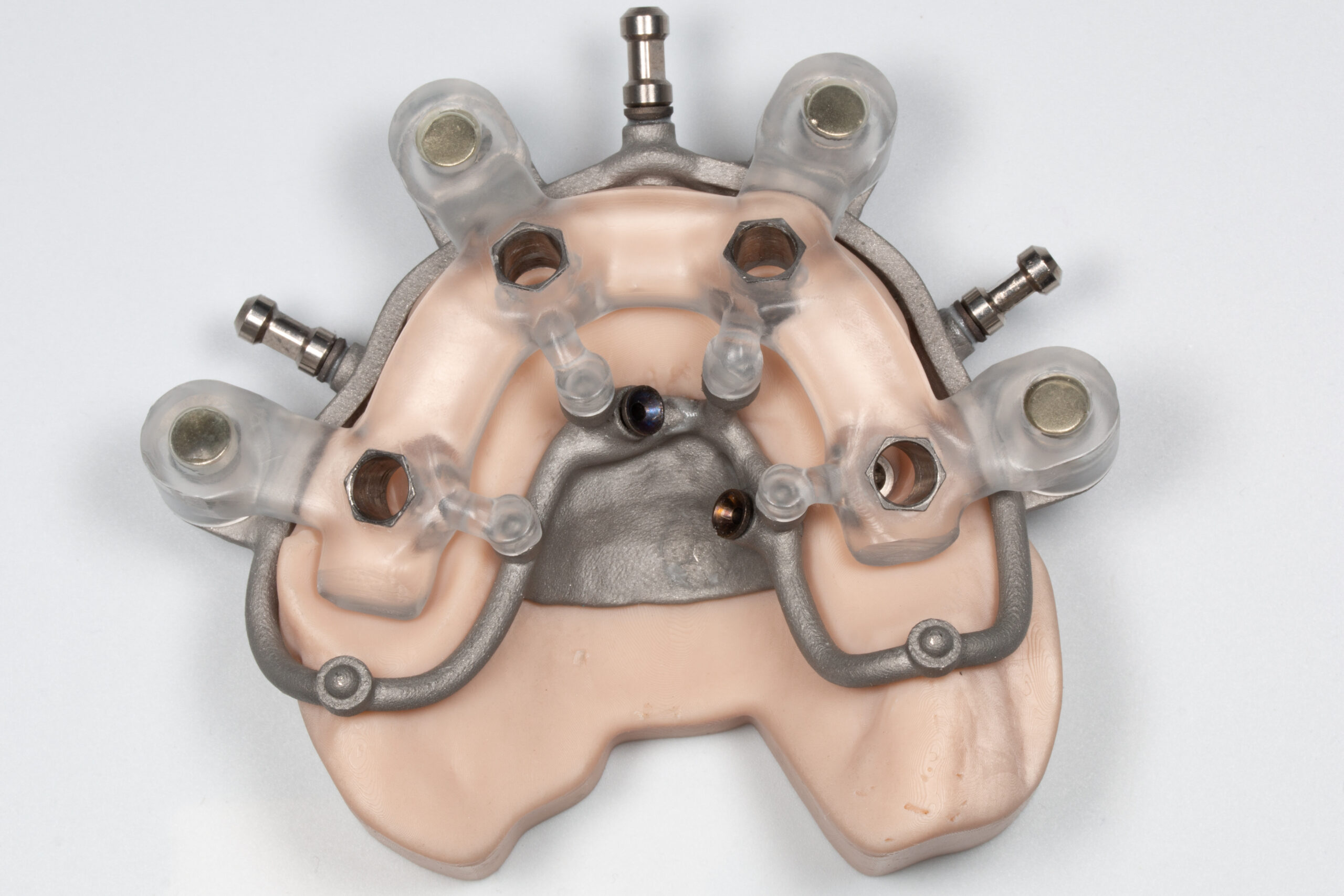
3. Base frame
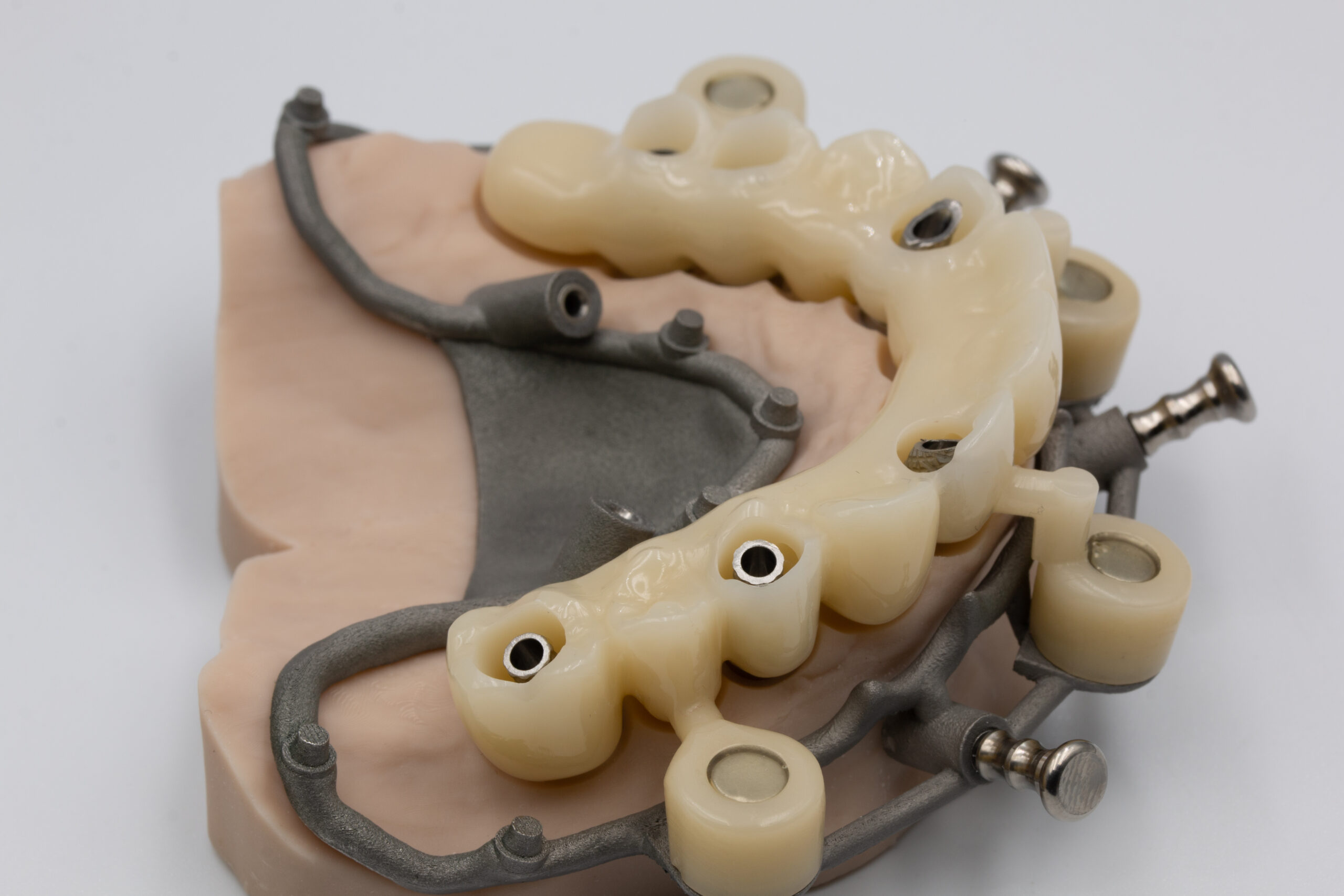
The zero guide has magnetic platforms for fixing all future components. It can also mark the level of bone tissue reduction and is secured to the bone by pins.
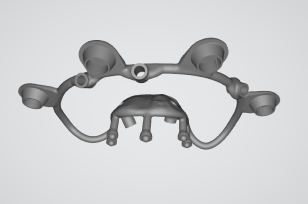
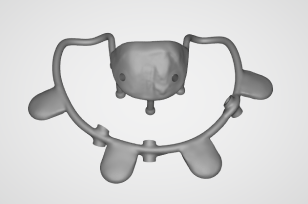
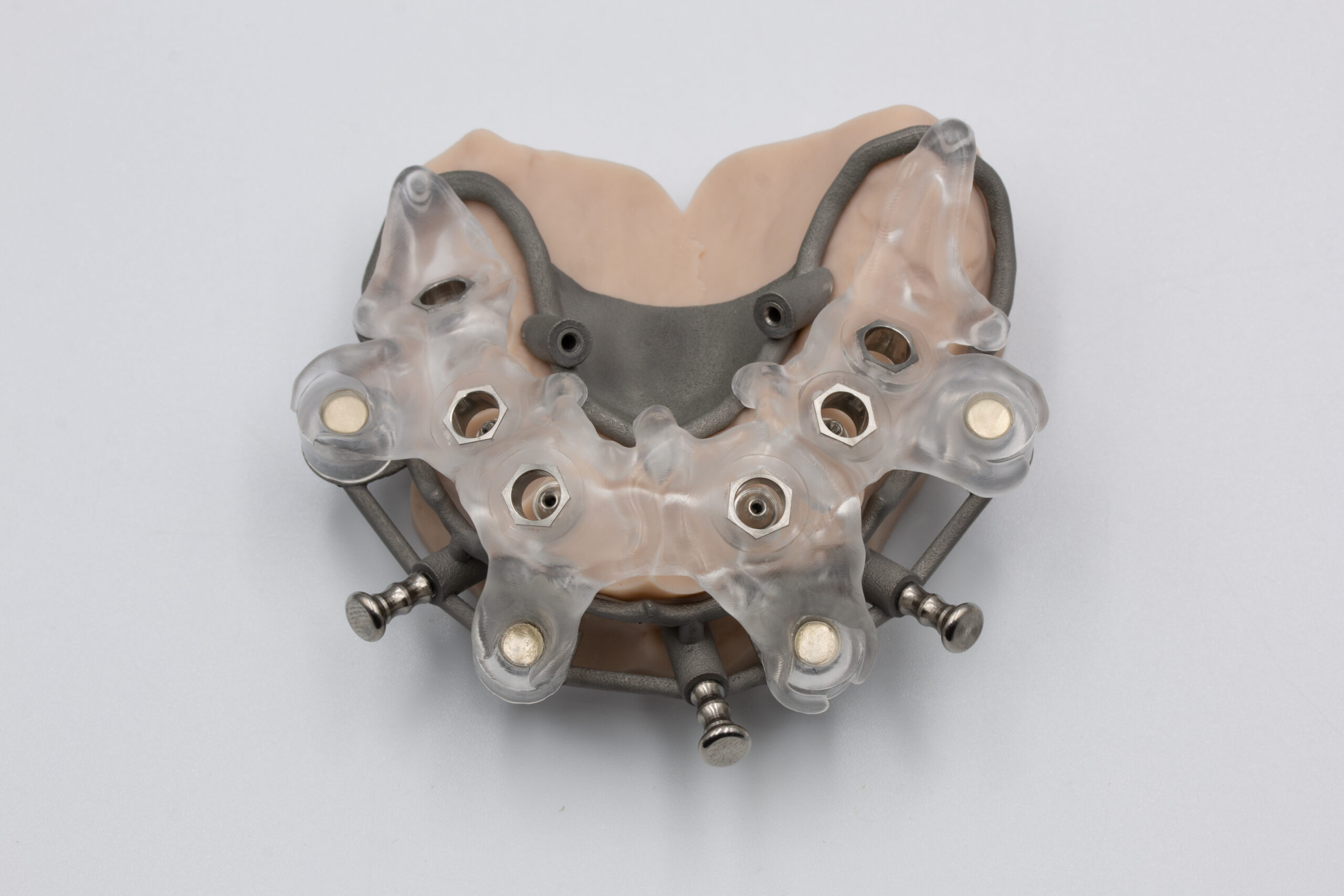
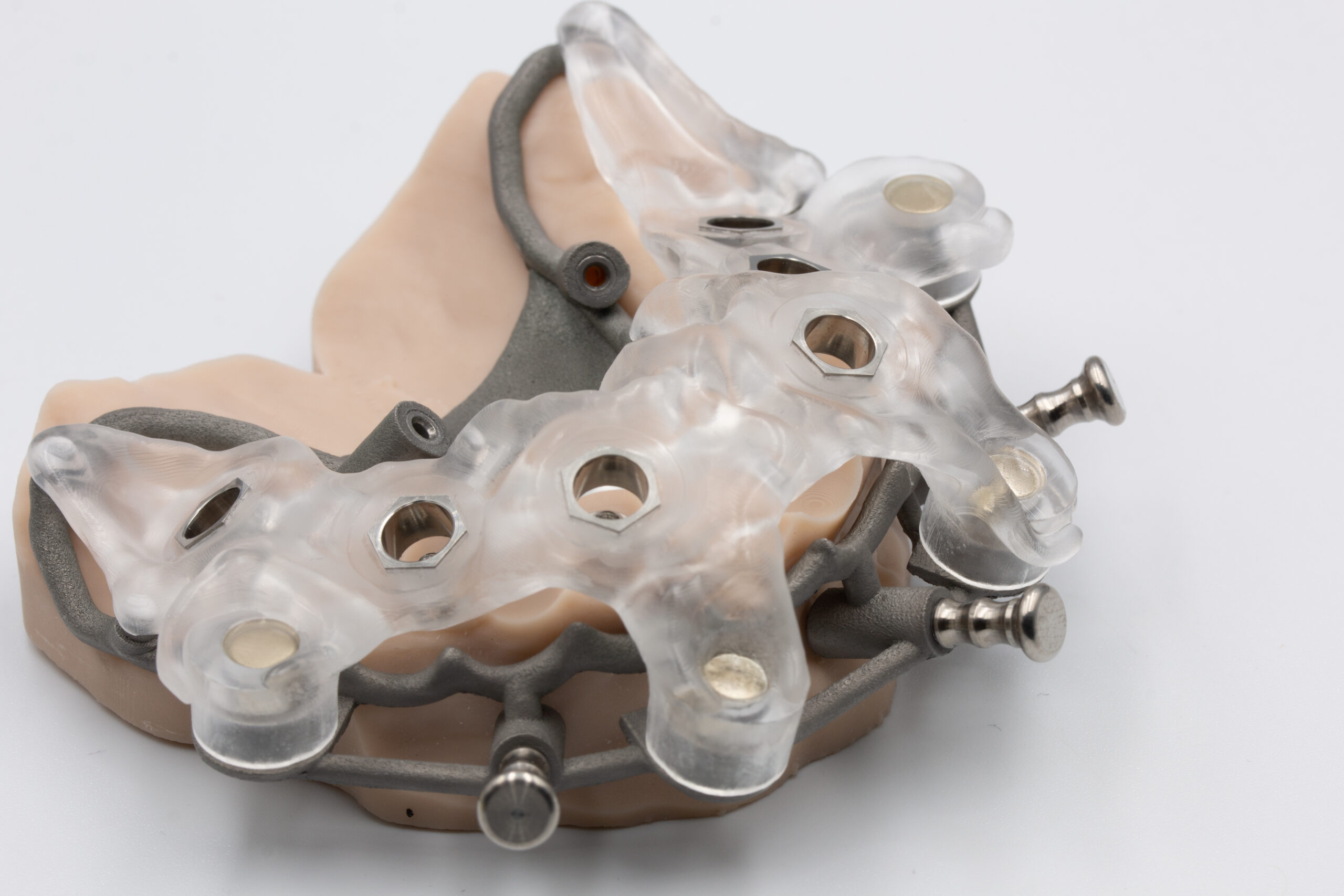
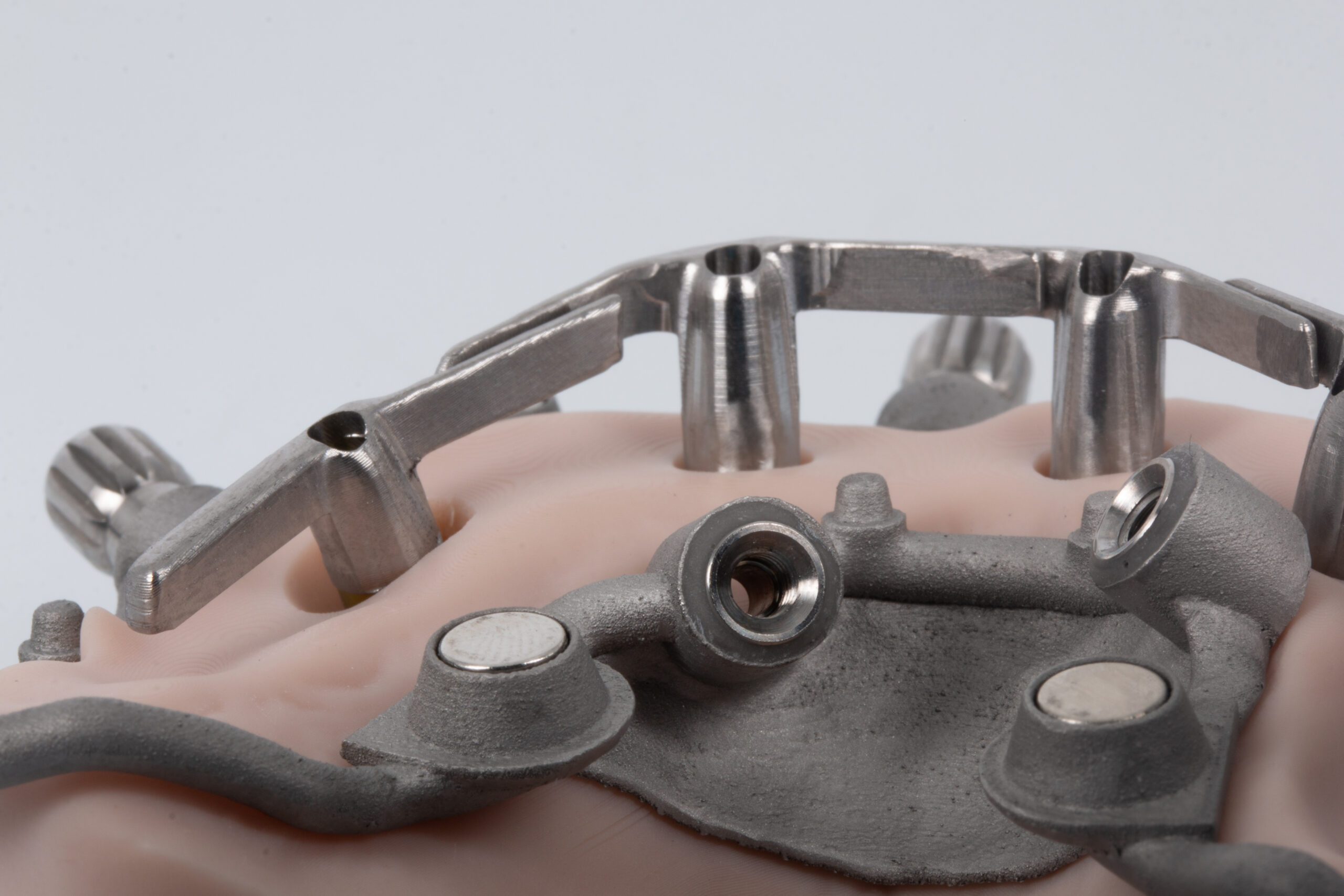
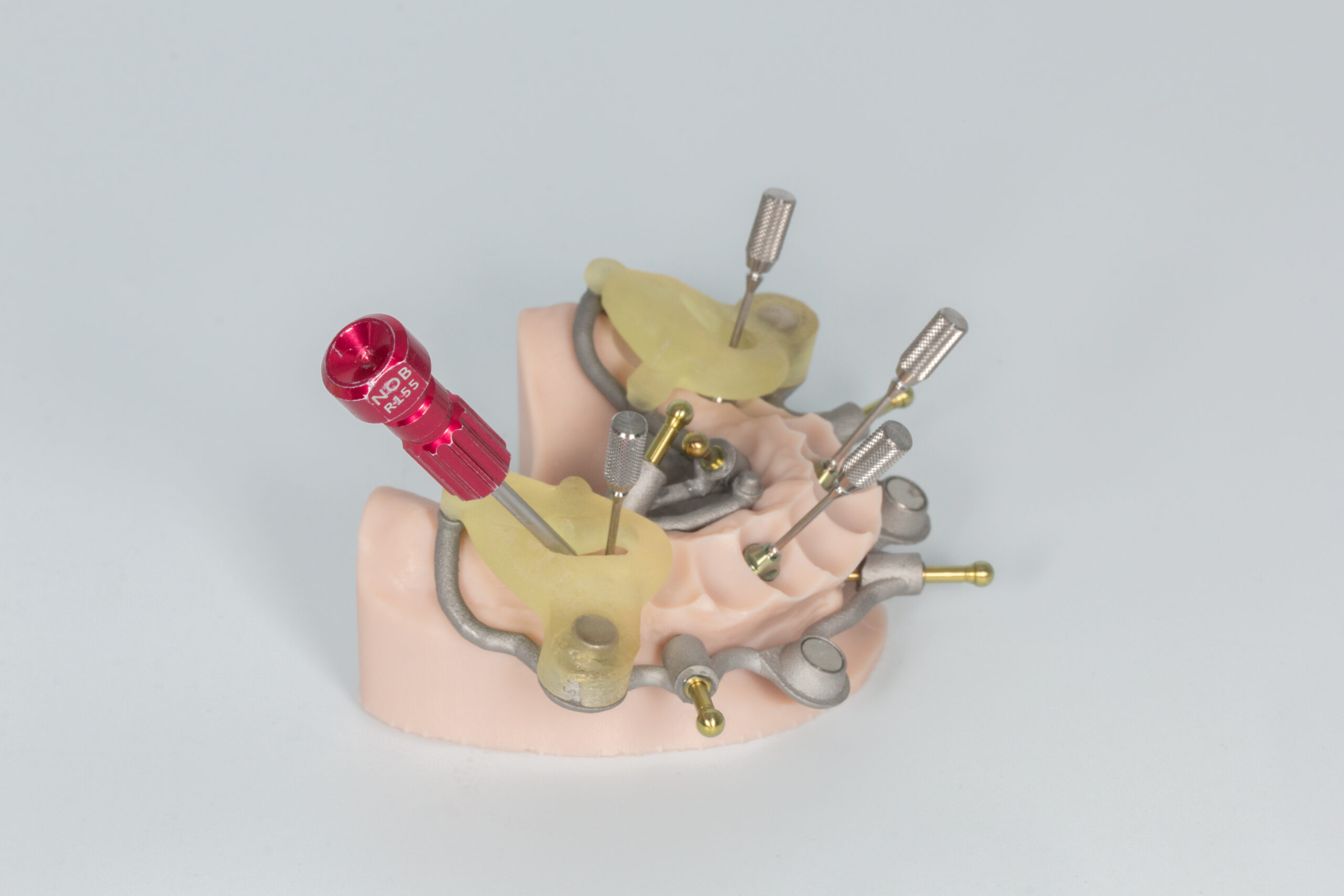
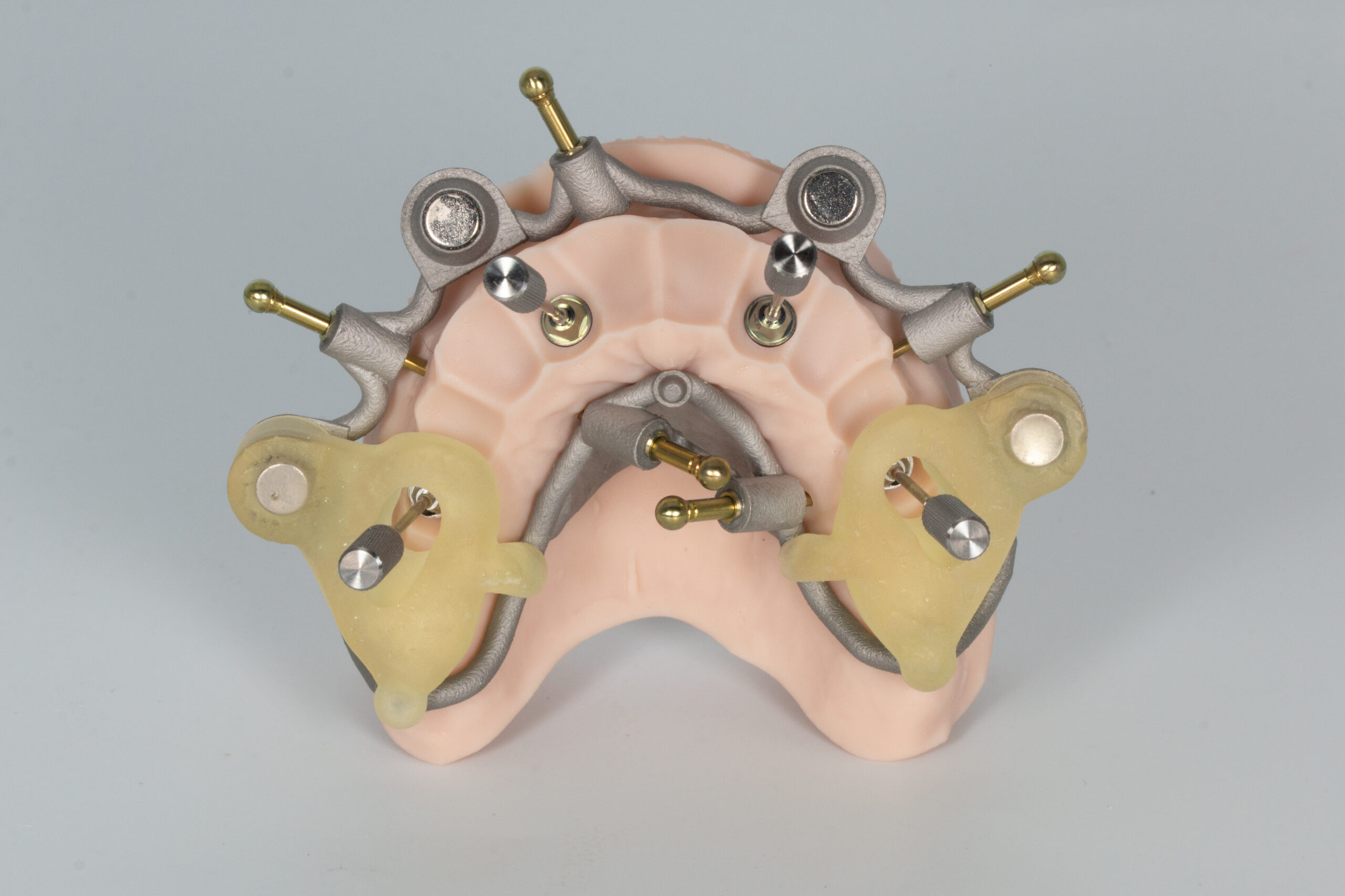
4. Guide with sleeves
This instrument is designed to ensure the drilling protocol and the placement of implants in the planned position.
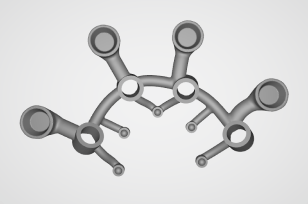
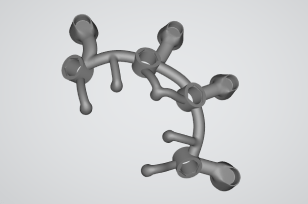
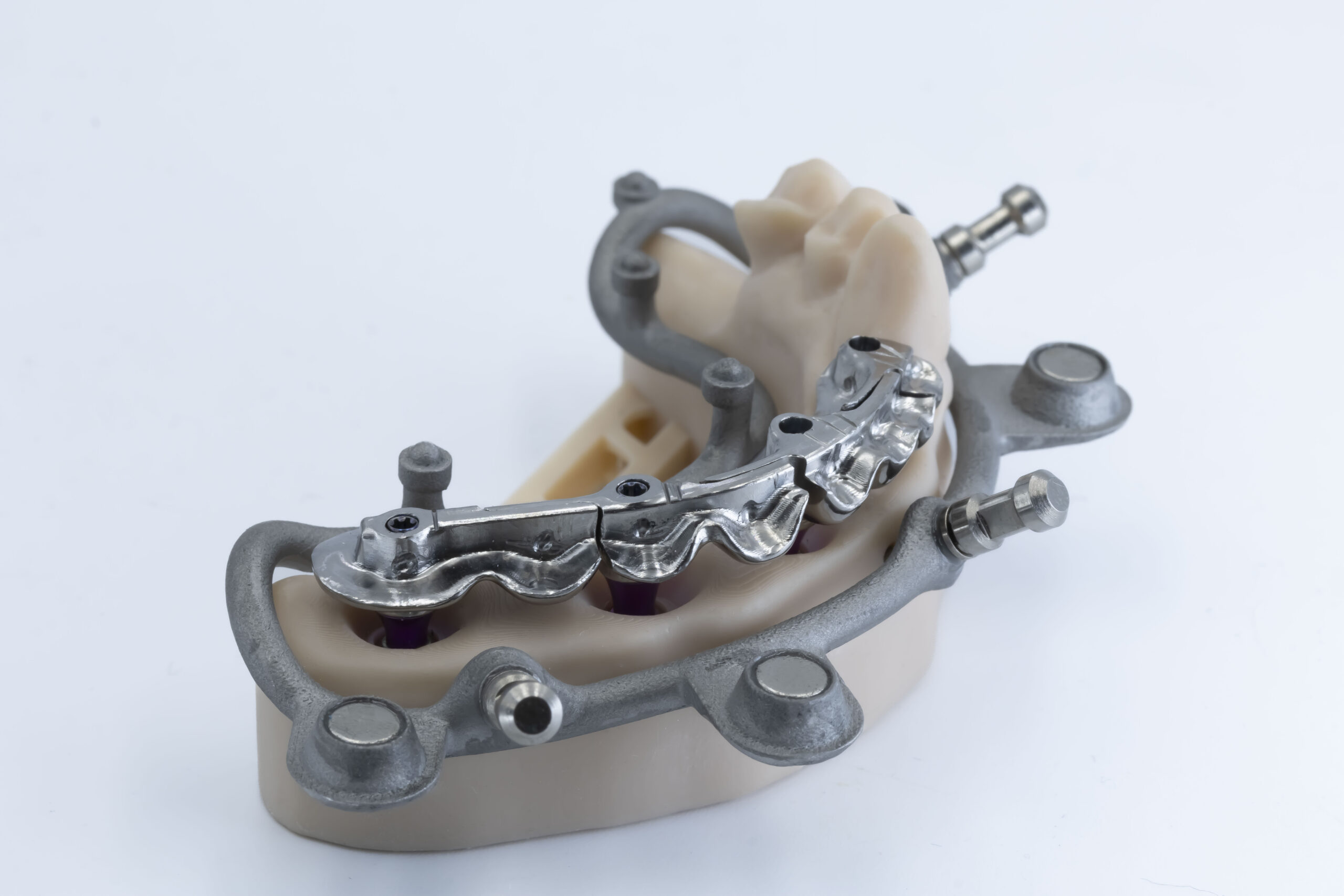
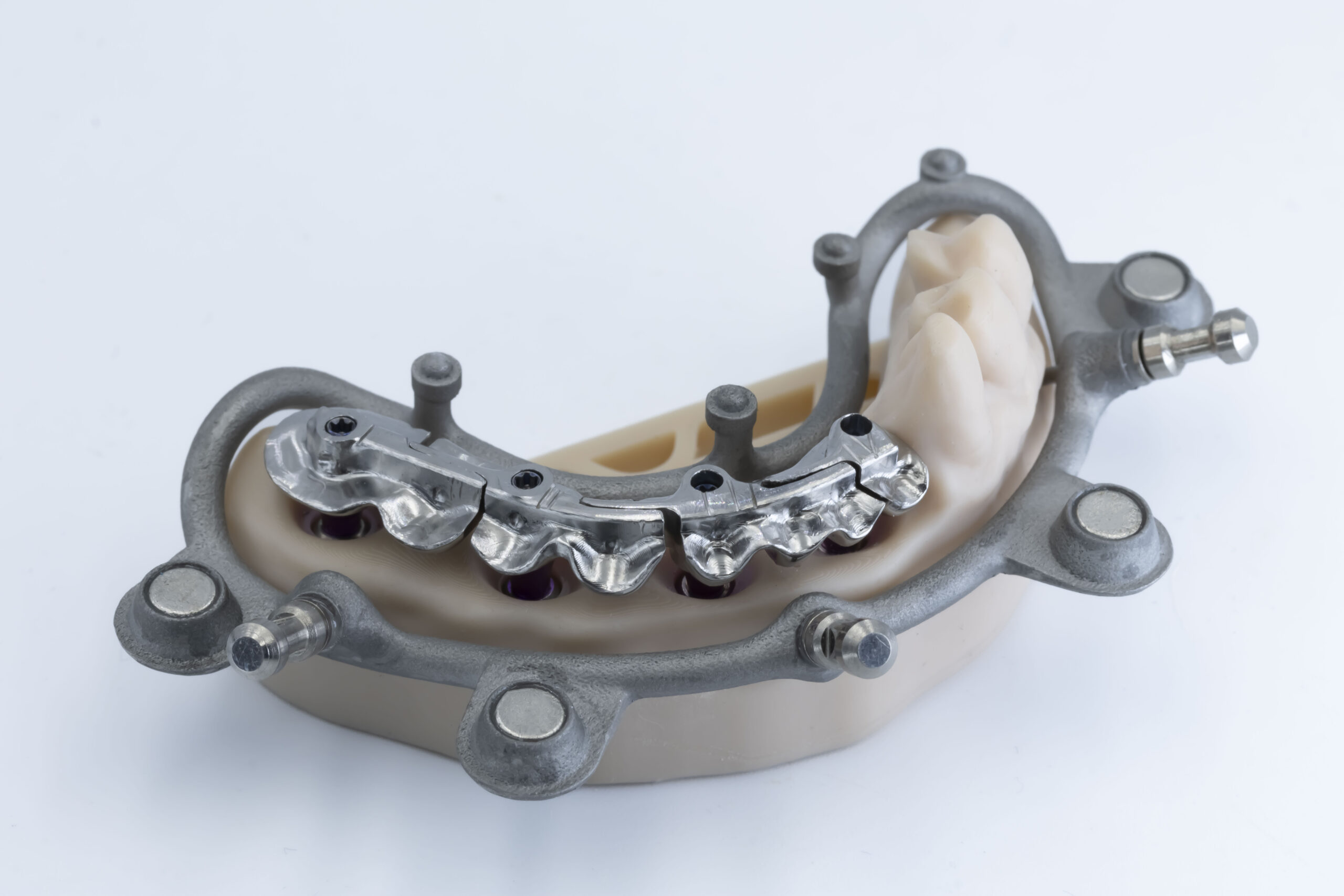
5. Stackable Titanium Bar
The stackable titanium bar fixes onto multi-units. This stackable bar is then welded using a welding apparatus.
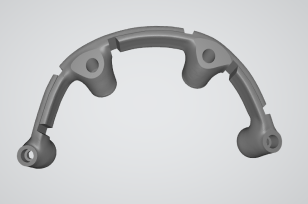
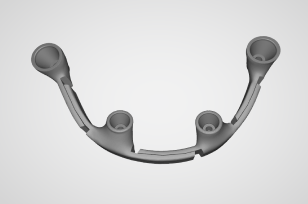
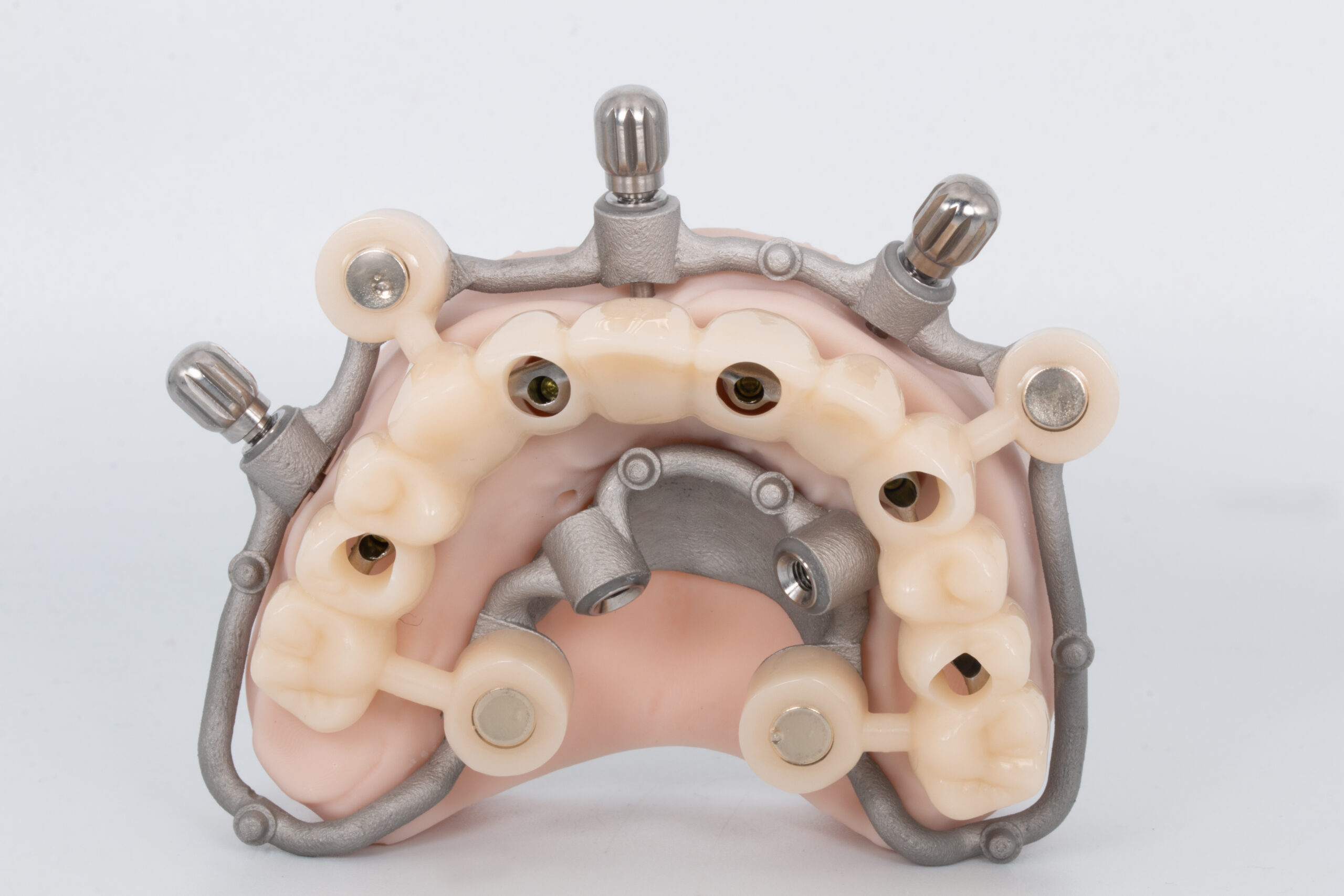
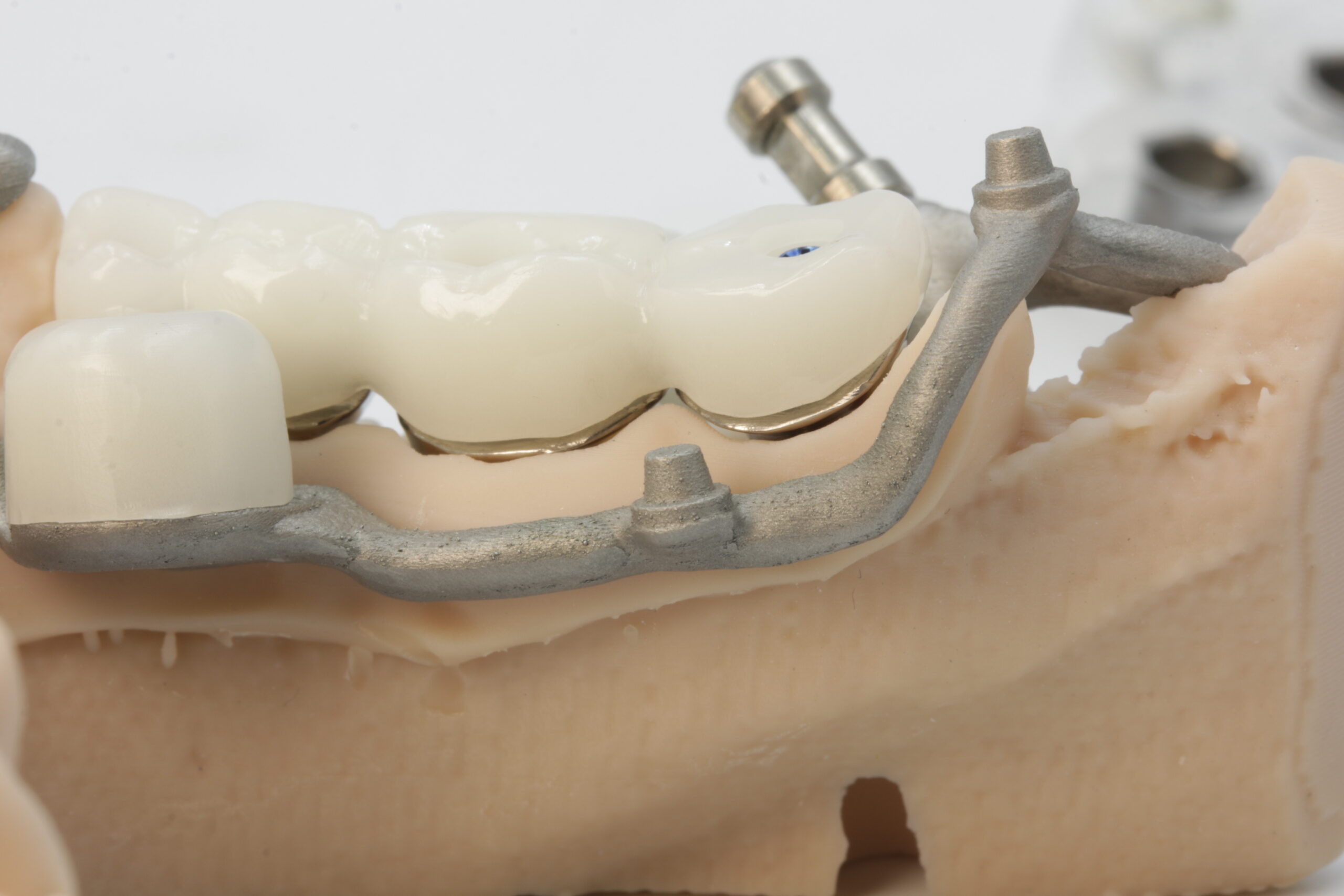
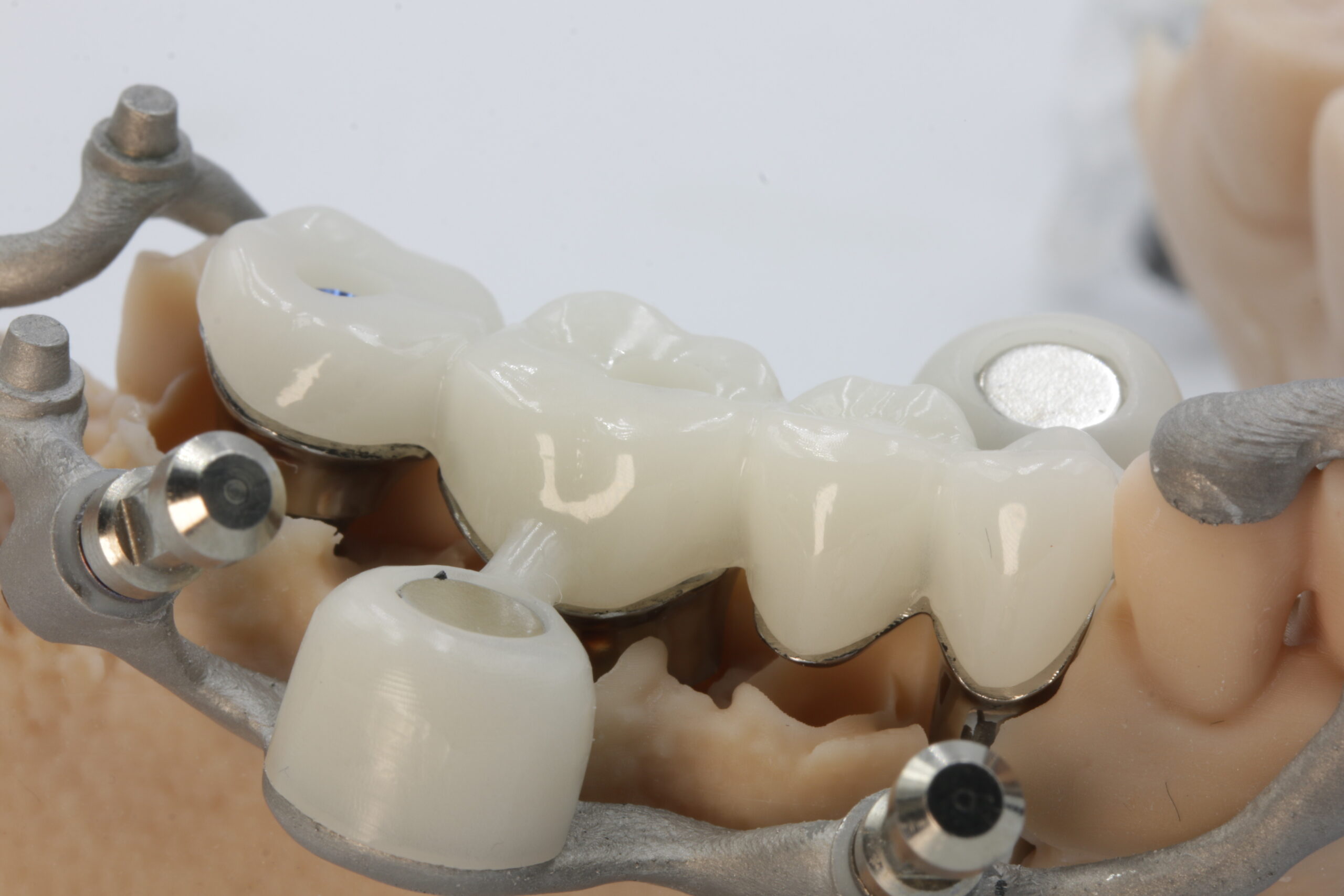
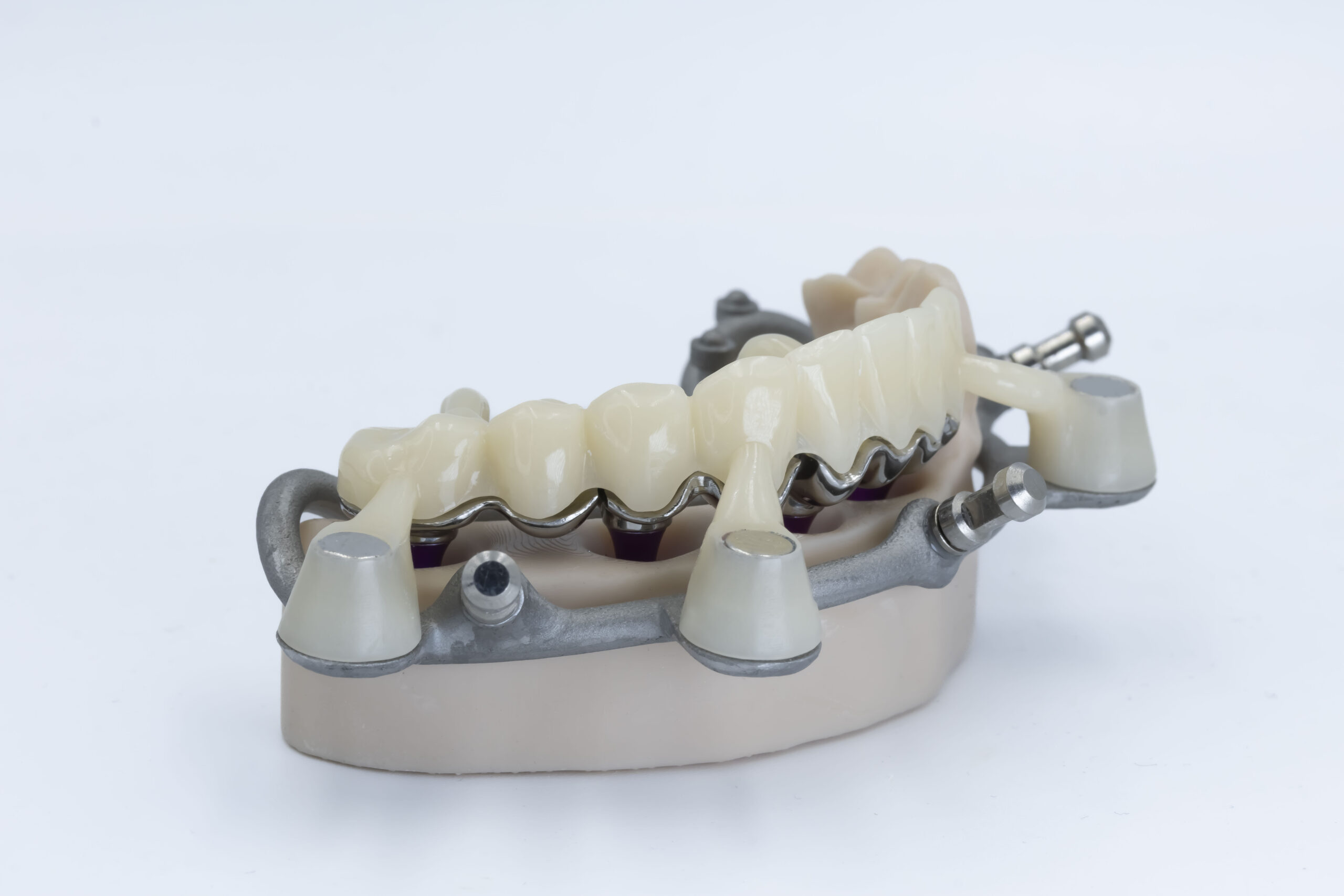
6. Temporary Prosthesis
The temporary prosthesis is installed in the correct position using positioners that attach to the support frame, and it is reinforced with a titanium bar.
Individual Titanium Meshes
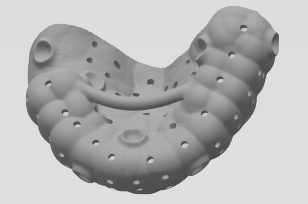
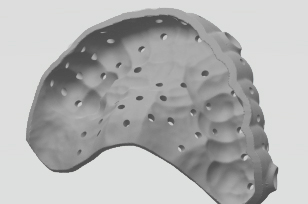
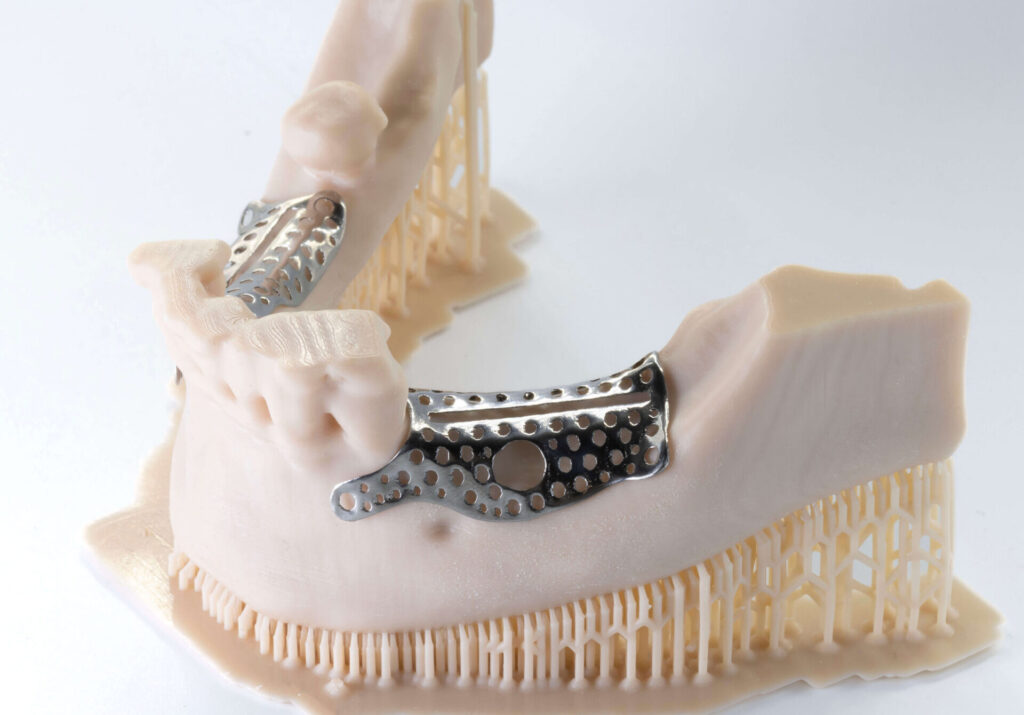
We manufacture titanium meshes for GBR (Guided Bone Regeneration) with a thickness of 0.4 mm.
We take into account: implant planning, future tooth anatomy, emergence profile, shrinkage of the augmentation material, the fixation system the clinician uses, and other nuances.
This reduces operative time and makes the surgery significantly more predictable.
Gallery
Навчання